
The Opportunity in Energy Disruption — Batteries Included
- Battery costs have fallen 93% since 2010, making alternatives in power generation and transport more economic without policy support — a structural shift that prior energy crises lacked.
- Asset owners and managers with exposure to import-dependent energy markets face accelerating divergence between companies with and without viable alternatives.
- The cost advantage of batteries is clear, but permitting grid queues and gas-dependent electricity supplies may delay capture. Portfolios may need to account for the bottleneck as well as the potential opportunity.
Past energy crises have accelerated investment in alternatives. The 1973 oil embargo triggered France's nuclear buildout. The 2022 Russian gas cutoff drove a surge in European heat pump installations. The pattern is consistent, but the economics of 2026 differ from prior episodes.
The Strait of Hormuz disruption in late March/early April of 2026 exposed the same import dependencies that have shaped energy policy for decades. It also coincided with a crucial inflection point: the cost of a core substitute technology — batteries — has fallen so far that the substitution case no longer depends on policy mandates or carbon pricing. Investors may wish to consider how this changes their calculus in examining utilities, autos, industrials and a host of other relevant industries.
The 93% decline that changes the economics for power generation and transport
Battery storage project costs have fallen 93% since 2010. That single number reshapes the economics of both electricity generation and transport, the two sectors where fossil-fuel import dependency creates the most exposure.
On the grid, storage converts intermittent renewables into dispatchable power, reducing dependence on imported gas for generation. In transport, it underpins the electric vehicles that reduce oil import dependency. A sustained period of elevated fuel costs compresses the payback period on both investments simultaneously.
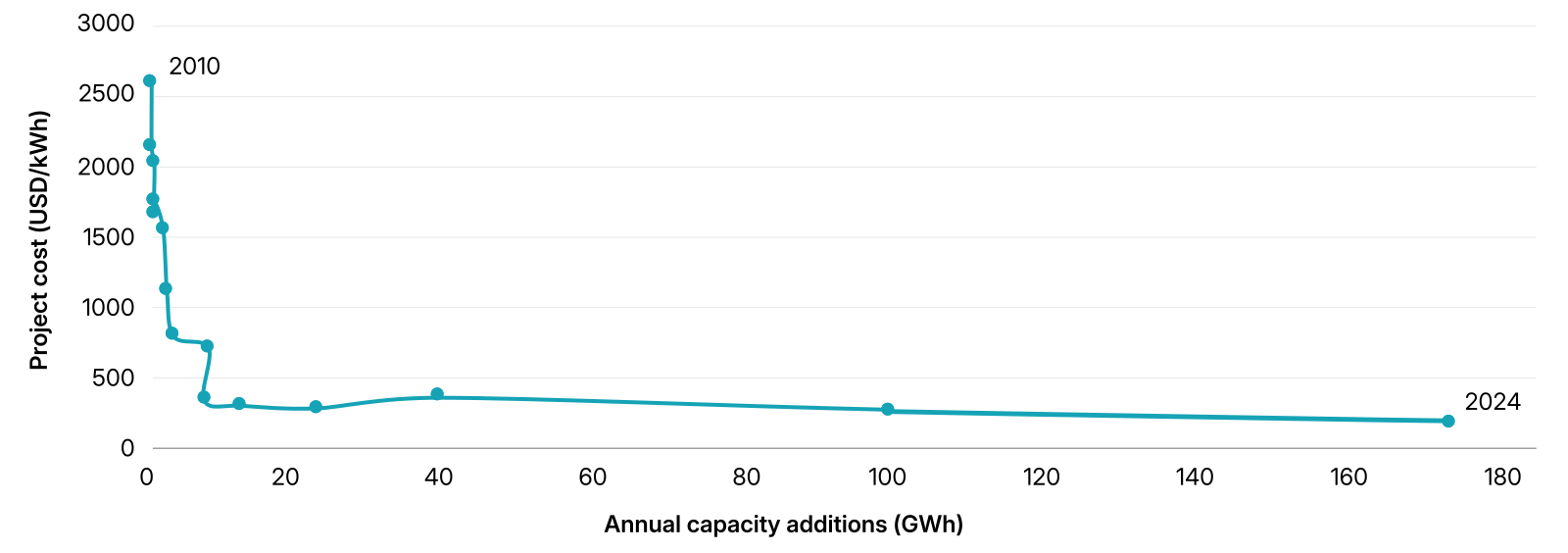
Source: MSCI Sustainability & Climate as of March 2026. Data from IRENA Renewable Power Generation Costs in 2024, July 2025.
In the near term, gas-to-coal switching is the more likely crisis response in some markets, particularly parts of Asia. But long-duration infrastructure investment is priced on a different time horizon. The question for investors is how quickly capital reallocates, and which companies are positioned to capture that shift.
Revenue follows the cost curve
The cost decline is observable in company data. For listed companies, revenue from energy storage and clean-electricity generation has grown across all regions since 2020, while revenue from wind and solar equipment has plateaued, as tax credits have been rolled back and some markets face overcapacity or bottlenecks. The plateau in equipment revenue alongside growing generation revenue suggests the industry may be shifting from buildout to operation. Storage trends may indicate where capital is flowing.
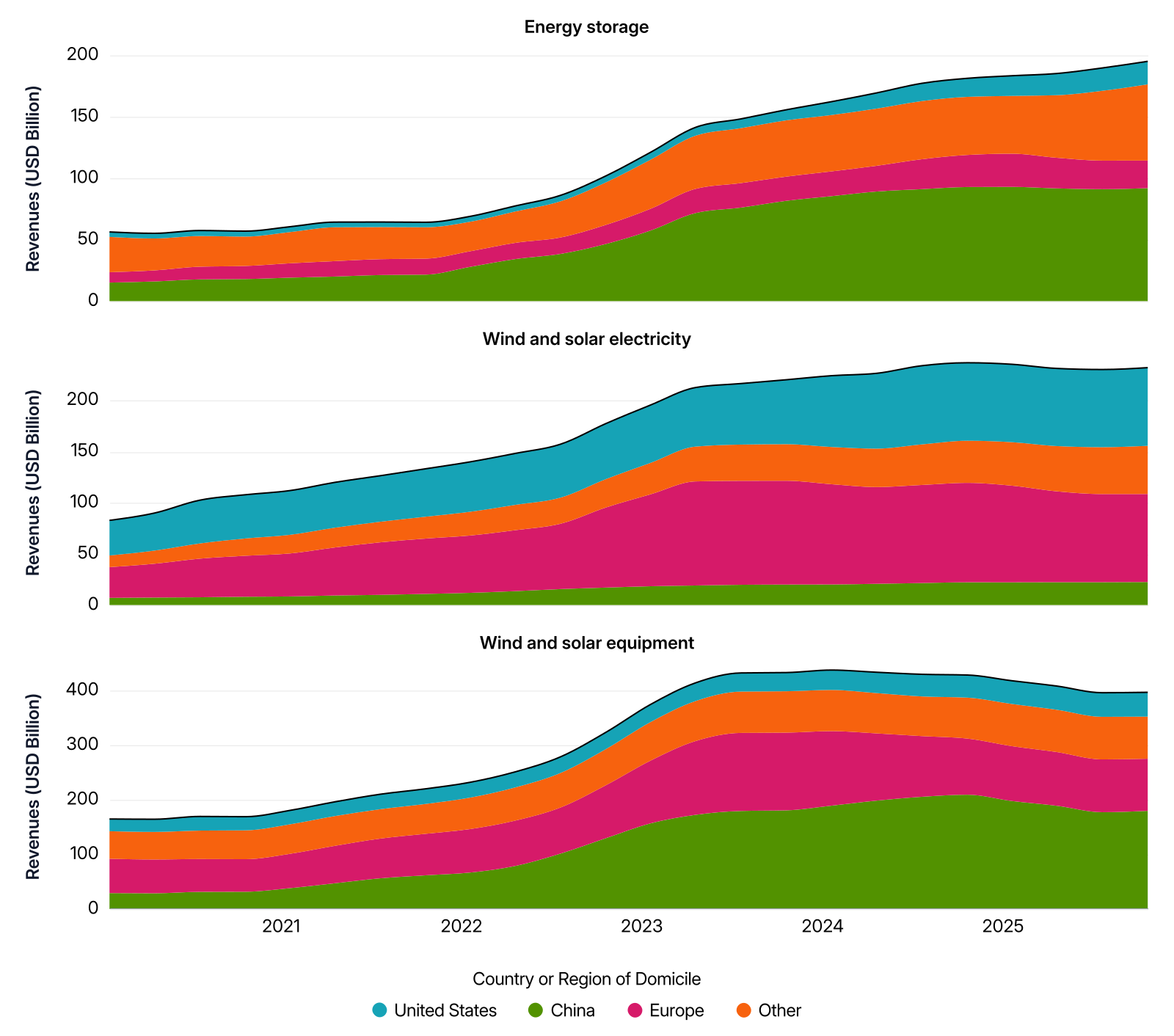
Source: MSCI Sustainability & Climate as of March 2026. Colored bands = regional shares, black line = total attributed revenue. Data from MSCI Sustainable Impact Metrics shown quarterly from March 31, 2020, through Dec. 31, 2025. Includes data for companies in the MSCI Climate Change Metrics universe over this period.
Electric vehicles may accelerate substitution
The automobile sector is one case where energy security exposure may accelerate a technology transition already underway. Unlike airlines or shipping, automobiles have a proven, cost-competitive electric alternative. The adoption data show this dynamic playing out, albeit unevenly.
China, with 74% oil import dependency, reached EV sales totaling nearly half of all new car purchases (including plug-in hybrids), reflecting underlying economic incentive. South Korea, at 100% import dependency, reached approximately 9% of total car sales, while Japan, also at 100%, remained below 3%. The gap reflects differences in industrial policy, consumer preferences and manufacturers' strategy.
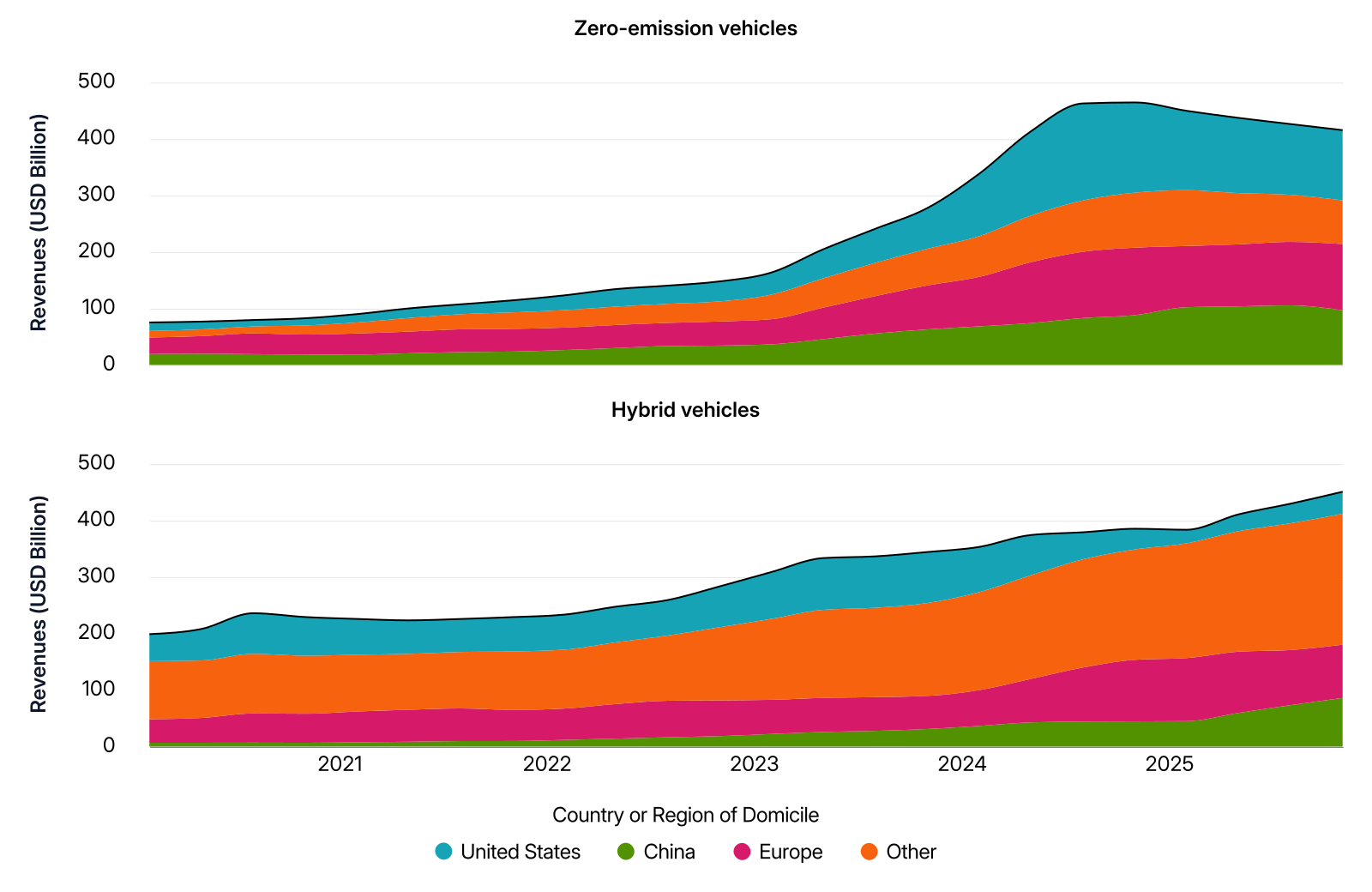
Source: MSCI Sustainability & Climate as of March 2026. Colored bands = regional shares, black line = total attributed revenue. Data from MSCI Sustainable Impact Metrics shown quarterly from March 31, 2020, through Dec. 31, 2025. Includes data for companies in the MSCI Climate Change Metrics universe over this period.
Who captures the opportunity?
Countries with the highest need for alternatives may now be able to adopt them. The question is which companies and industries benefit.
Electricity providers and equipment manufacturers may be the most direct beneficiaries. Power generation has the most mature decarbonization options available, according to our research assessments: renewable electricity technologies are mature, commercially adoptable technologies, reflecting cost competitiveness and proven deployment at scale.
Unlike heavy industry, which depends on high temperature heat to transform materials, data centers run on electricity — making their decarbonization commercially viable through access to low-carbon power rather than new process technologies. For hyperscalers making billion-dollar location decisions, the combination of renewables and storage may offer a more predictable cost base than imported-gas-dependent grids, especially given the focus on speed to market and equipment availability. (See more on power and data centers.)
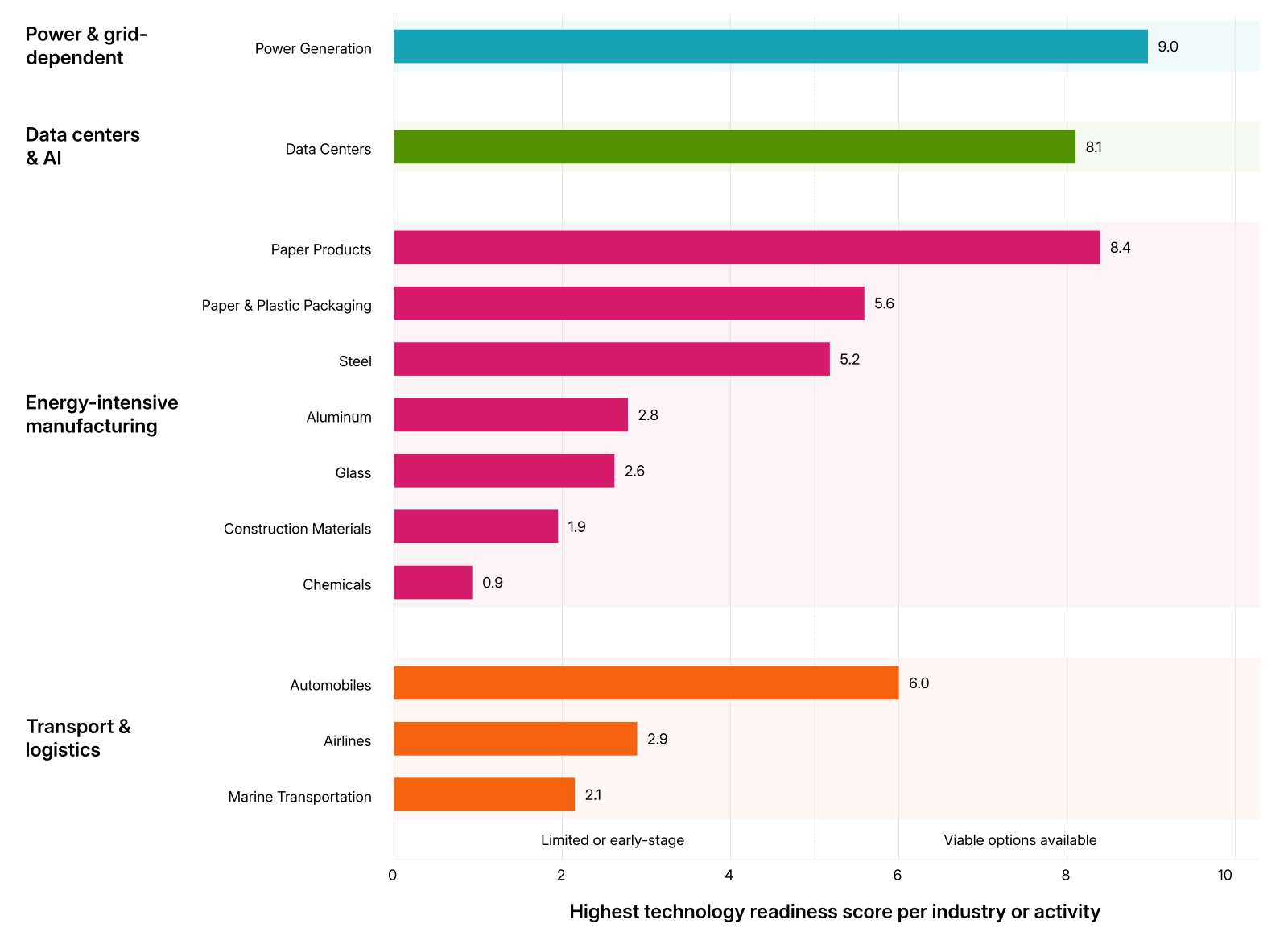
Source: MSCI Sustainability & Climate as of March 2026. MSCI’s energy transition technology-readiness scores are assessed for over 130 technologies across 22 industry contexts. Each technology is scored on four dimensions: cost parity with incumbent processes, market development and deployment scale, resource and supply chain readiness and decarbonization potential. The score shown for each industry is the highest-scoring individual technology available to that industry context, on a 0–10 scale. Energy producers are not shown.
Automobile manufacturers with early EV commitments may be positioned to capture demand that energy-cost volatility accelerates. The revenue data already show this divergence at the regional level.
For industries without mature alternatives — chemicals, cement, aluminum, airlines — the same elevated costs compress margins. The opportunity appears concentrated where the technology is most commercially adoptable.
The structural opportunity for alternative energy
Prior energy crises have been associated with temporary increases in alternative energy investment that faded as prices normalized. A distinguishing feature of 2026 is that the alternatives no longer need elevated fossil fuel prices to compete. Battery costs have crossed a threshold where storage and EVs may be economic on their own terms in many markets.
A sustained period of high import costs accelerates adoption. But even if oil returns to USD 70 per barrel and European gas benchmarks retreat to EUR 25/MWh, the substitution economics may hold under these assumptions. This could represent a structural shift rather than a crisis-driven cycle.

Sustainable investing powered by insight
MSCI’s sustainability data, models, ratings and metrics enable you to better manage risk and identify opportunity.
MSCI Energy Transition Score: A New Dimension of Risk
How can investors better gauge transition readiness? The MSCI Energy Transition Score provides new insights beyond existing metrics and shows limited market sensitivity across asset classes.
Sustainability and Climate in Focus: Trends to Watch for 2026
As governments pivot toward security and technology, markets are increasingly defining the sustainability agenda. We explore how capital, data and risk are driving the next phase of the transition.
The content of this page is for informational purposes only and is intended for institutional professionals with the analytical resources and tools necessary to interpret any performance information. Nothing herein is intended to recommend any product, tool or service. For all references to laws, rules or regulations, please note that the information is provided “as is” and does not constitute legal advice or any binding interpretation. Any approach to comply with regulatory or policy initiatives should be discussed with your own legal counsel and/or the relevant competent authority, as needed.