
The Promise and Limitations of AI in Climate Data
- Most corporate carbon-emissions reporting is inconsistent and often lacks critical information. For example, around 40% of reported Scope 1 and 2 emissions do not specify their scope or operational coverage.
- Institutional investors using climate data for investment decisions or portfolio-emissions reporting require data that is reliable, comparable and transparent.
- While advances in AI have long supported the extraction of corporate climate disclosures, producing fit-for-purpose climate data requires substantial human judgement and effective human-AI collaboration.
You don't have to work too hard to imagine a world where increasingly powerful and cost-effective AI tools can instantly extract every listed company's reported emissions and climate-target data. Yet turning that information into comparable data across issuers and portfolios remains a significant challenge.
From extracted disclosures to comparable climate dataUsing companies' reported emissions and climate targets for investment decisions or portfolio-level disclosure requires more than extracting disclosures — it requires interpreting data consistently across issuers.
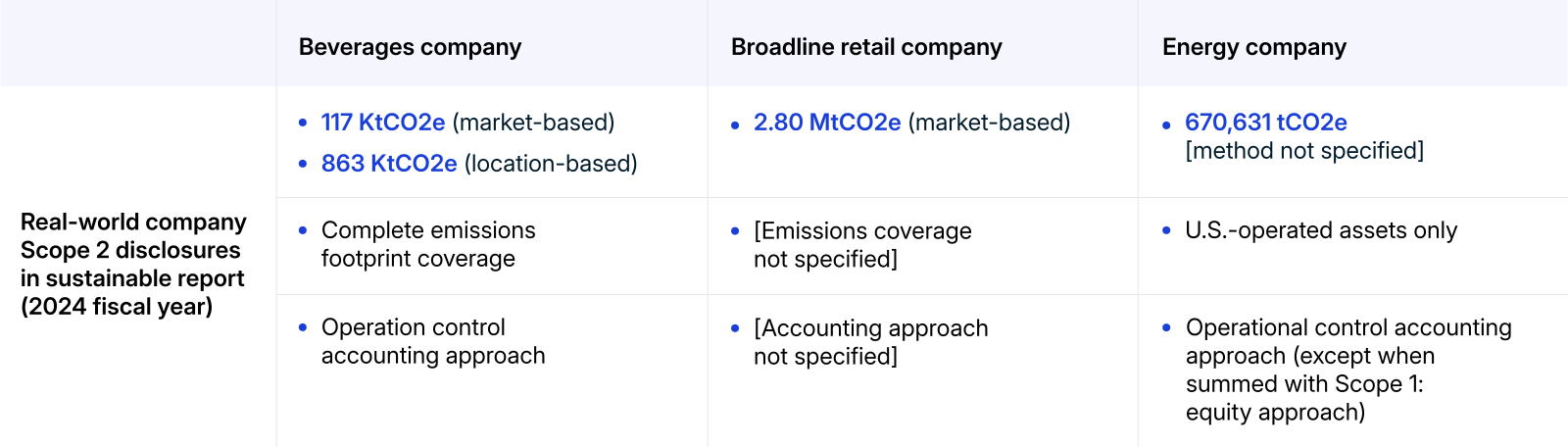
These examples are taken from the reports of three anonymized listed companies. Source: Sample companies' 2024 reports.
The example data gaps below draw on nearly 98,000 annual emissions disclosures and almost 61,000 climate targets from around 11,000 listed companies in MSCI Sustainability and Climate's dataset.
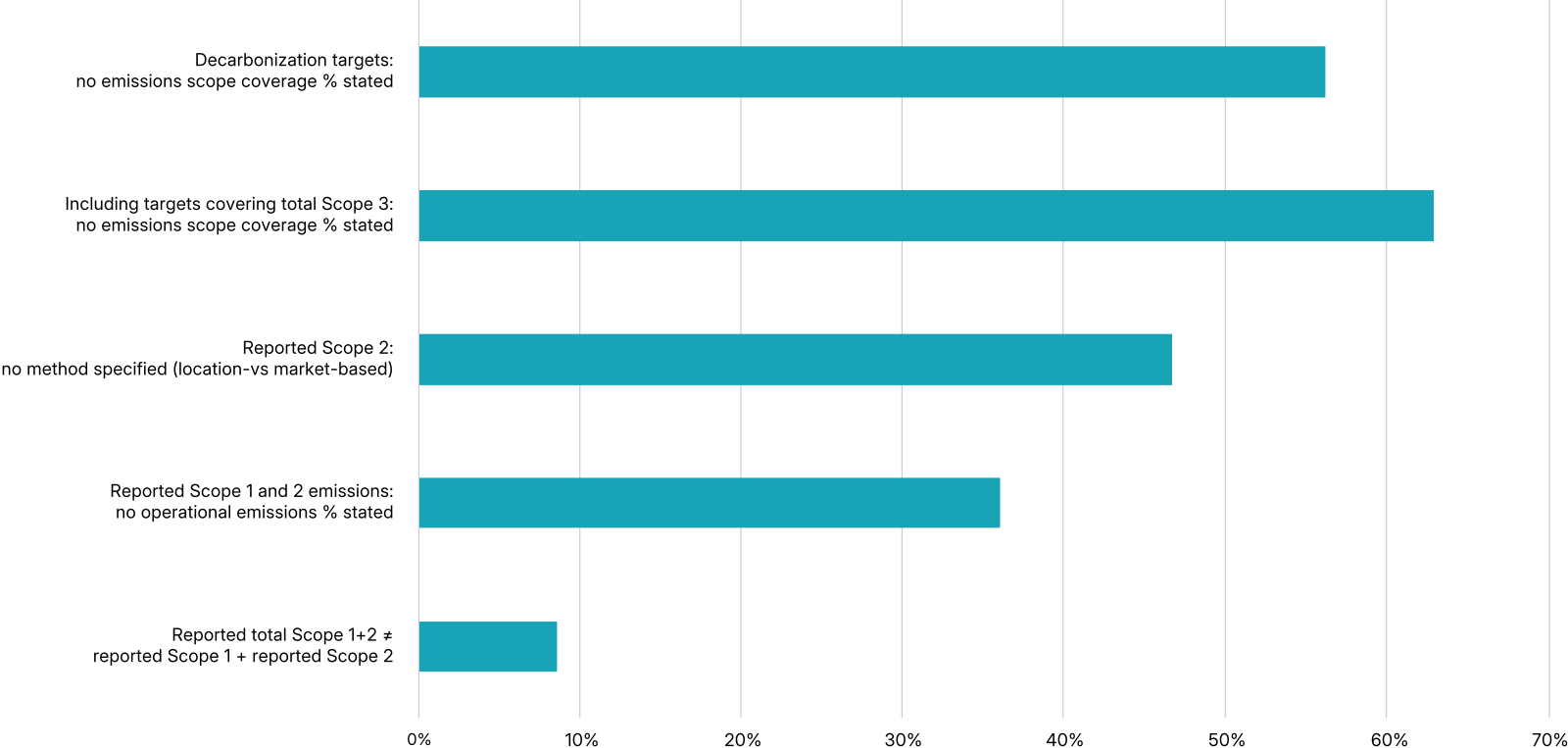
Data as of February 2026 for emissions-data records and June 2026 for decarbonization targets. Source: MSCI Sustainability & Climate. MSCI Sustainability & Climate products and services are provided by MSCI Solutions LLC in the United States and MSCI Solutions (UK) Limited in the United Kingdom and certain other related entities.
The chart highlights just a few examples of the information gaps and inconsistencies found in corporate climate disclosures. We detail below why substantial human judgement is still needed to produce reliable, comparable climate data.
Operational coverage. Approximately 36% of annual Scope 1 and Scope 2 emissions disclosures do not specify whether the reported figures cover a company's entire operations or only select business activities. Assuming full operational coverage when none is specified can lead to material errors in analysis.
Decarbonization-target coverage. Around 56% of the corporate climate targets we analyzed did not explicitly state the share of emissions they cover. Coverage is critical for assessing the ambition of a target. For instance, the Science-Based Targets initiative (SBTi) requires near-term Scope 3 targets to cover at least 67% of emissions and most long-term targets to cover at least 90%.1
Scope 2 reporting method. Scope 2 emissions can be reported using either a location-based method, reflecting average grid emissions, or a market-based approach, which accounts for clean-energy certificates. The difference can be significant, yet nearly half (47%) of reported Scope 2 emissions do not specify which method was used.
Reported Scope 1 and Scope 2 totals. A reported combined Scope 1 and Scope 2 figure is not always equal to the sum of the individually reported Scope 1 and Scope 2 values. We found this divergence for 8.7% of disclosures, reflecting the use of different carbon-accounting approaches.
These examples illustrate only a small subset of the interpretation required to produce comparable climate data. In reviewing MSCI's emissions and climate-target methodologies, we identified more than 200 types of judgement calls needed to address inconsistent, incomplete or ambiguous corporate disclosures.2
Trust, but verifyReported climate disclosures are only one part of the picture. They need to be consistent with a company's broader reported data and business activities (e.g., production volumes). For example, what if a carmaker reports exceptionally low Scope 2 emissions relative to the number of vehicles it sells and compared with its peers?
A closer review may reveal, for example, that this company has excluded some emissions from subsidiaries in which it holds a majority stake — taking an equity-share approach. Under the GHG Protocol, companies may account for these emissions using either an operational-control or equity-share approach. As illustrated below, both approaches are valid, but they can produce materially different emissions totals. Determining whether the reported figures are complete, comparable and consistent therefore requires expert review rather than relying on reported climate data alone.
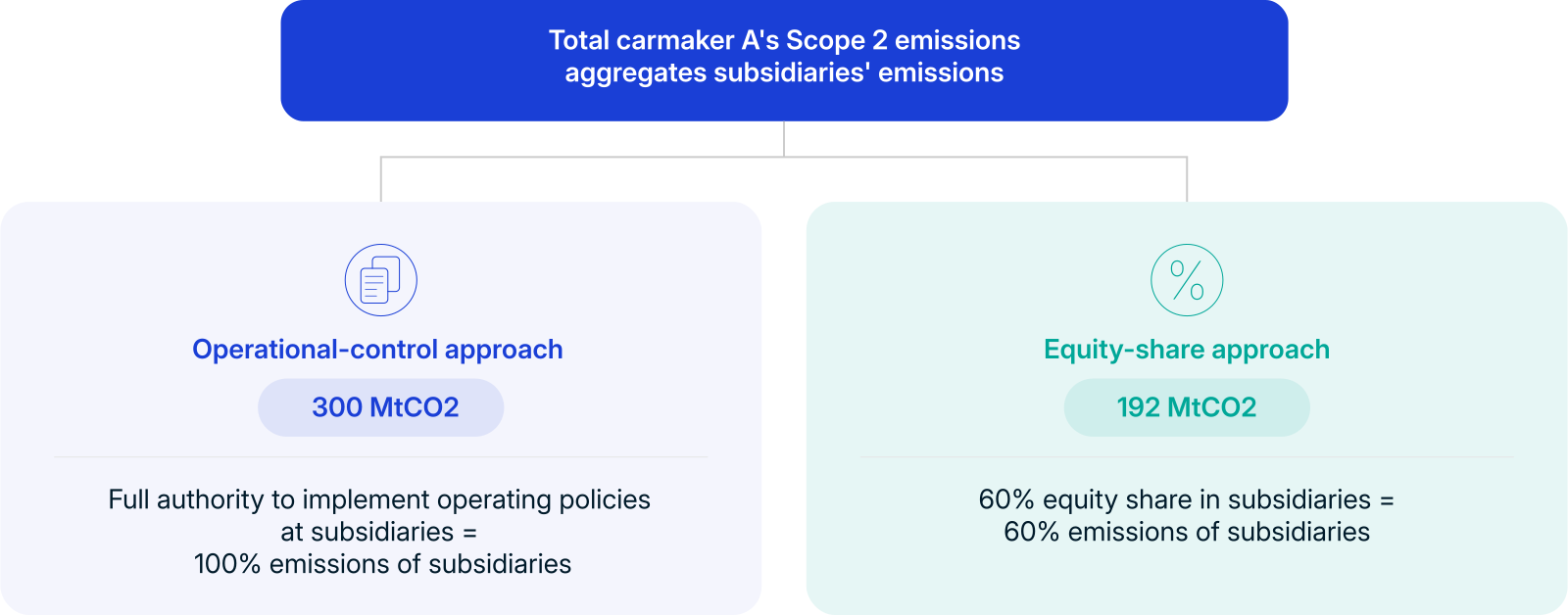
This stylized example is not based on a specific company and is for illustrative purposes only. Source: MSCI Sustainability & Climate, as of June 2026.
The metadata, quality checks and interpretation described above are created before, and independently of, the data-extraction process. They provide the foundation for models and investment analytics to produce consistent, comparable results.
Consider a common investor question: How can I estimate future emissions for the companies in my portfolio? Answering this requires more than extracting reported emissions and target values.
As we illustrate below, even automated models must first resolve several metadata questions, such as whether reported emissions and targets use the same accounting basis and whether the reported values are complete and comparable.
MSCI's models build on this standardized data foundation to deliver consistent projection estimates across companies.
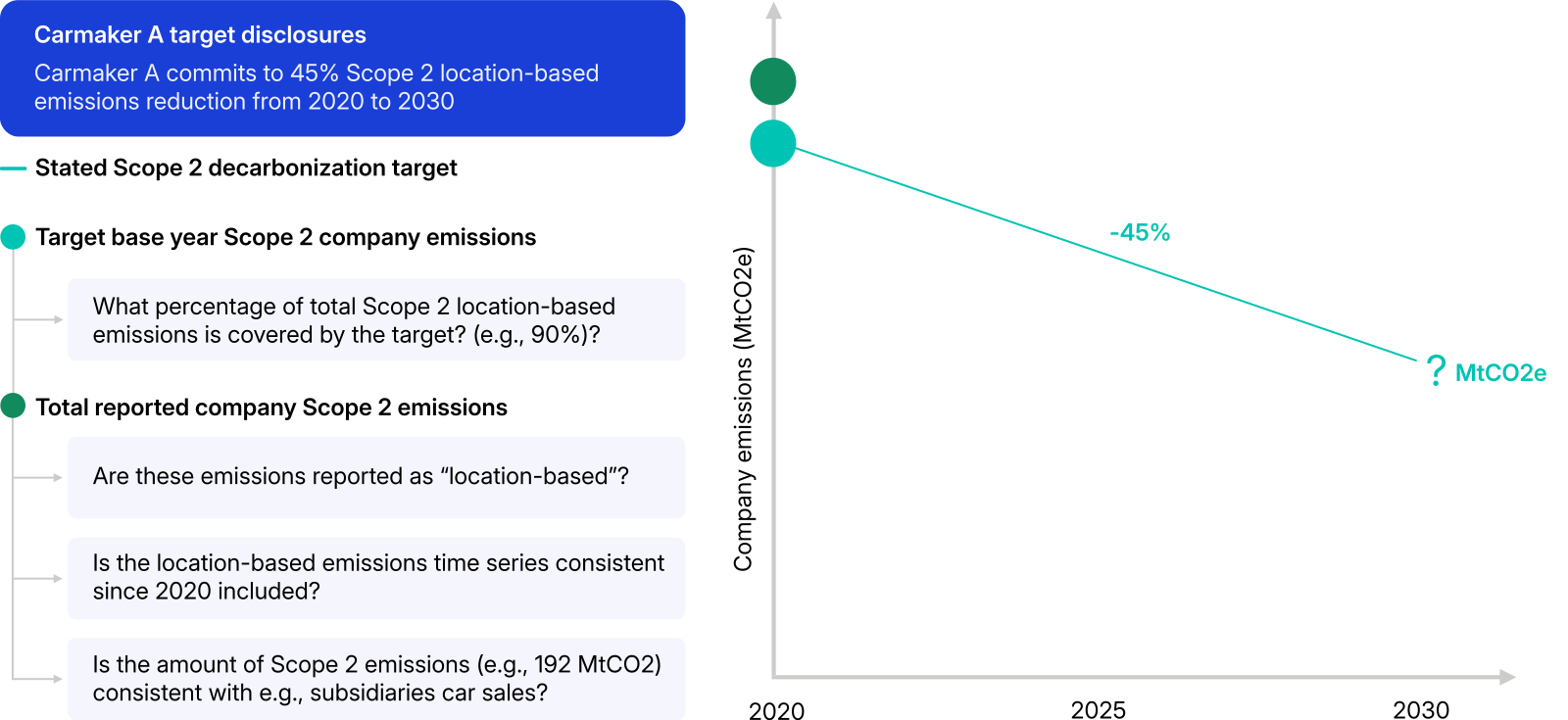
This stylized example is not based on a specific company and is for illustrative purposes only. Source: MSCI Sustainability & Climate, as of June 2026.
How climate-data gaps are resolved matters because the resulting data informs real investment decisions, from assessing company emissions to constructing and reporting portfolio emissions.
Reliable portfolio-level emissions reporting is also becoming increasingly important as disclosure and assurance requirements expand in jurisdictions such as the European Union.3 Emerging disclosure standards may also result in new data methodology and collection questions.4
Extracting reported climate disclosures is not the hard part. The greater challenge remains transforming inconsistent corporate reporting into reliable, comparable and investment-ready data. This means hundreds of questions to ask, metadata points to create and judgements to own.
AI will continue to accelerate the collection and processing of climate disclosures. But as long as corporate reporting remains incomplete and inconsistently structured, expert judgement will remain essential to make these climate data investment-grade.
This is one case where humans and AI work best together.


Subscribe todayto have insights delivered to your inbox.
How AI Becomes Investment Grade
For institutional investors, competitive advantage will arise less from AI models themselves than from the quality of the data, methodologies and governance that support them.
Scope 2 Revisions and Investor Impact
Changes to Scope 2 guidance may increase reported emissions for some sectors. Investors could see portfolio metrics shift, even if underlying corporate decarbonization progress remains unchanged.
1 "The Corporate Net-Zero Standard, Version 1.3.1," Science Based Targets initiative (SBTi), April 2026.
2 Analysis based on "Climate Data Operations Collection Methodology," MSCI Sustainability and Climate, September 2025 (client access only) and "Climate Targets & Commitments Methodology," MSCI Sustainability and Climate, May 2024.
3 "Directive (EU) 2022/2464 of the European Parliament and of the Council amending Directive 2013/34/EU and others as regards corporate sustainability reporting (Corporate Sustainability Reporting Directive)," Official Journal of the European Union, December 2022.
4 See, for example, "Actions and Market Instruments (AMI) Phase 1 White Paper — Request for Information," Greenhouse Gas Protocol, March 2026.
The content of this page is for informational purposes only and is intended for institutional professionals with the analytical resources and tools necessary to interpret any performance information. Nothing herein is intended to recommend any product, tool or service. For all references to laws, rules or regulations, please note that the information is provided “as is” and does not constitute legal advice or any binding interpretation. Any approach to comply with regulatory or policy initiatives should be discussed with your own legal counsel and/or the relevant competent authority, as needed.