
Carbon-Credit Integrity in the ACCU Market
Preview
The Australian Carbon Credit Unit (ACCU) Scheme has evolved rapidly since 2023, with Safeguard Mechanism reforms driving new compliance demand. While compliance markets are often assumed to produce uniform credits, MSCI Carbon Markets’ study of Environmental Plantings and Plantation Forestry projects finds meaningful variation in integrity outcomes.
Using a geospatial, data-driven framework, the analysis highlights how project-level characteristics and methodological design influence both risk and pricing. Limited public disclosure has historically constrained scrutiny, but enhanced data analysis reveals that integrity differentiation is both observable and financially material within the ACCU market.
Key takeaways:
- Integrity premiums: Higher-integrity Environmental Plantings credits command sustained price premiums.
- Project-level variation: Integrity outcomes differ materially across projects.
- Methodological effects: Design choices increase dispersion in quantification and permanence risk.
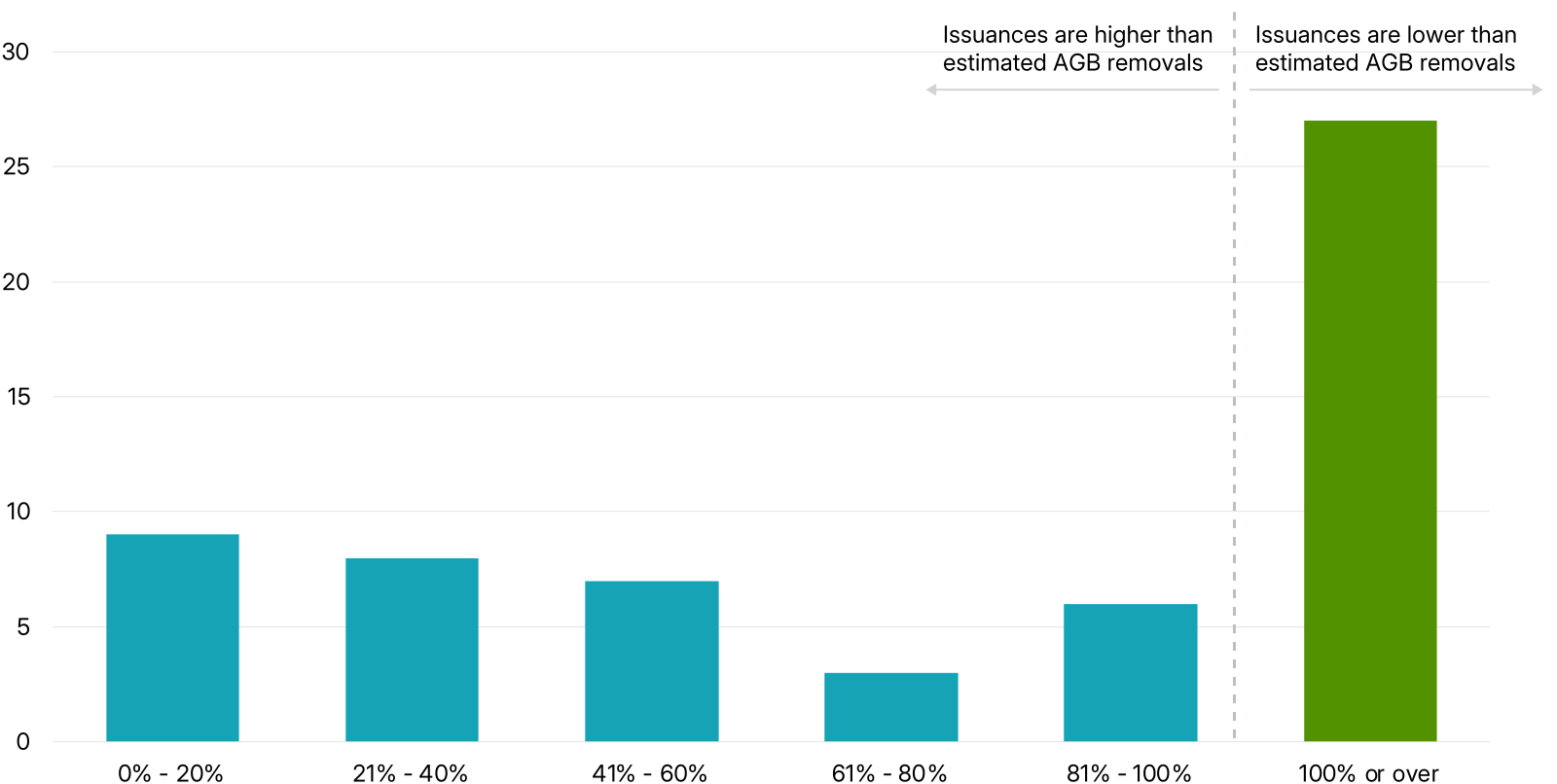
Data as of February 2026. Source: Chloris Earth, MSCI Carbon Markets



Read the full paper
Provide your information for instant access to our research papers.
2025 State of Integrity in the Global Carbon-Credit Market
Our 2025 report on the global carbon-credit market shows rising demand for high-integrity credits with stronger ratings, higher prices and new risk frameworks are shaping a more credible market.
Do Mangrove Credits Reflect Real Biomass Growth?
Aboveground biomass trajectories provide an observable benchmark for assessing mangrove credit issuances, highlighting variation in project-level growth outcomes and alignment with ecological change.
The content of this page is for informational purposes only and is intended for institutional professionals with the analytical resources and tools necessary to interpret any performance information. Nothing herein is intended to recommend any product, tool or service. For all references to laws, rules or regulations, please note that the information is provided “as is” and does not constitute legal advice or any binding interpretation. Any approach to comply with regulatory or policy initiatives should be discussed with your own legal counsel and/or the relevant competent authority, as needed.