
Agentic AI Widens Tech Spreads, but Hardware Holds Firm
Credit spreads in the information-technology (IT) and communication-services sectors of the MSCI USD High Yield (HY) Corporate Bond Index have widened sharply in 2026, as fears of AI-led disruption increased. Yet the repricing has varied across sub-industries, suggesting the sell-off was more targeted than a blanket tech repricing.
Agentic AI triggered repricing across tech-related credit
As of March 31, both the IT and communication-services sectors carried option-adjusted spreads (OAS) around 400 basis points, the widest among all sectors within the index. IT spreads surpassed the levels reached during the tariff-driven volatility in 2025. The catalyst was the rollout of agentic-AI productivity tools earlier this year, which renewed concerns that incumbents could lose market share to AI-native competitors, prompting a broad repricing of credit risk across both sectors.1
The dispersion beneath the sector-level headlines
Within sub-industries, spreads for IT consulting widened the most year to date, as agentic AI posed a direct challenge to labor-intensive delivery models. Interactive media and services followed, with AI-generated content threatening digital platforms. Application software, the largest sub-industry by market value in the IT sector, also widened as single-product providers and those lacking proprietary data faced the pressure. By contrast, hardware-oriented sub-industries narrowed or held steady. Internet services, technology hardware and semiconductors all saw spreads tighten, potentially benefiting from continued capital spending tied to AI infrastructure buildout.
The pattern played out across asset classes. In public equities, the U.S. underperformance in early 2026, driven mainly by the software sell-off, was concentrated in a handful of tech-related industries. In private credit, business-development companies (BDCs) with higher software exposure underperformed peers by roughly 6% on an unlevered basis. This cross-asset repricing illustrates how index-level transparency — across equities, high yield and private credit — could give multi-asset-class allocators a sharper lens for monitoring AI-related risk.
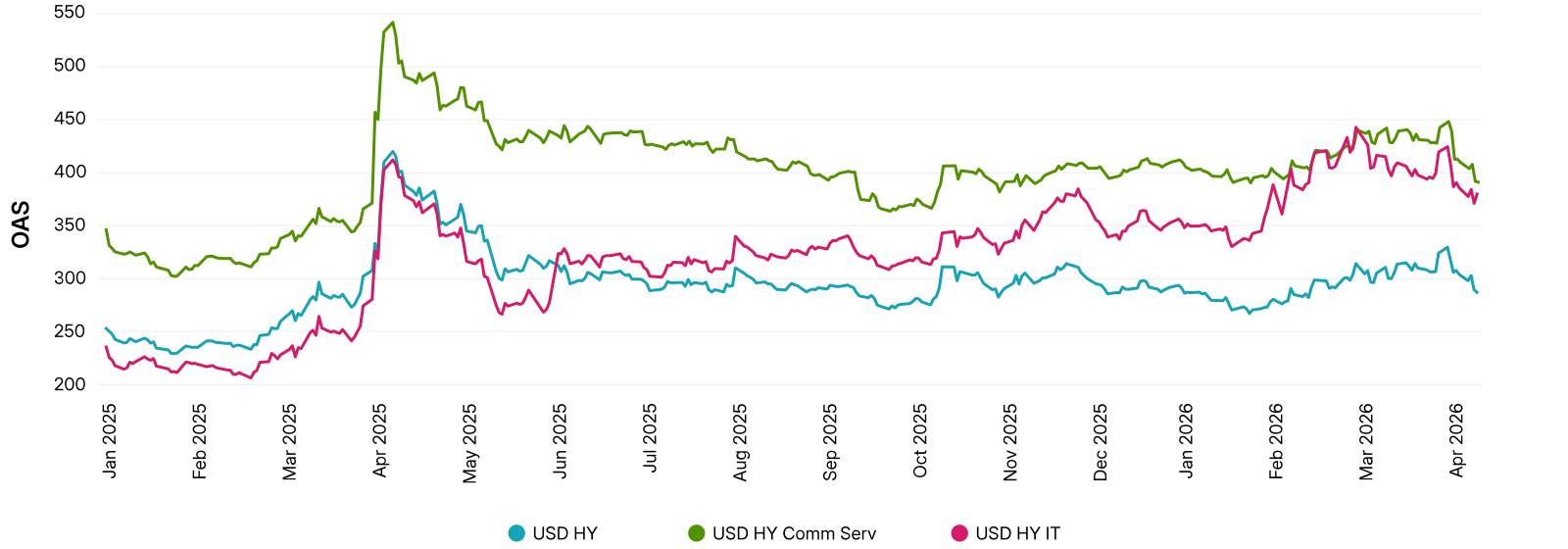
OAS for MSCI USD HY, HY IT and HY Communication Services Indexes for the sample period Dec 31, 2024, to March 31, 2026.
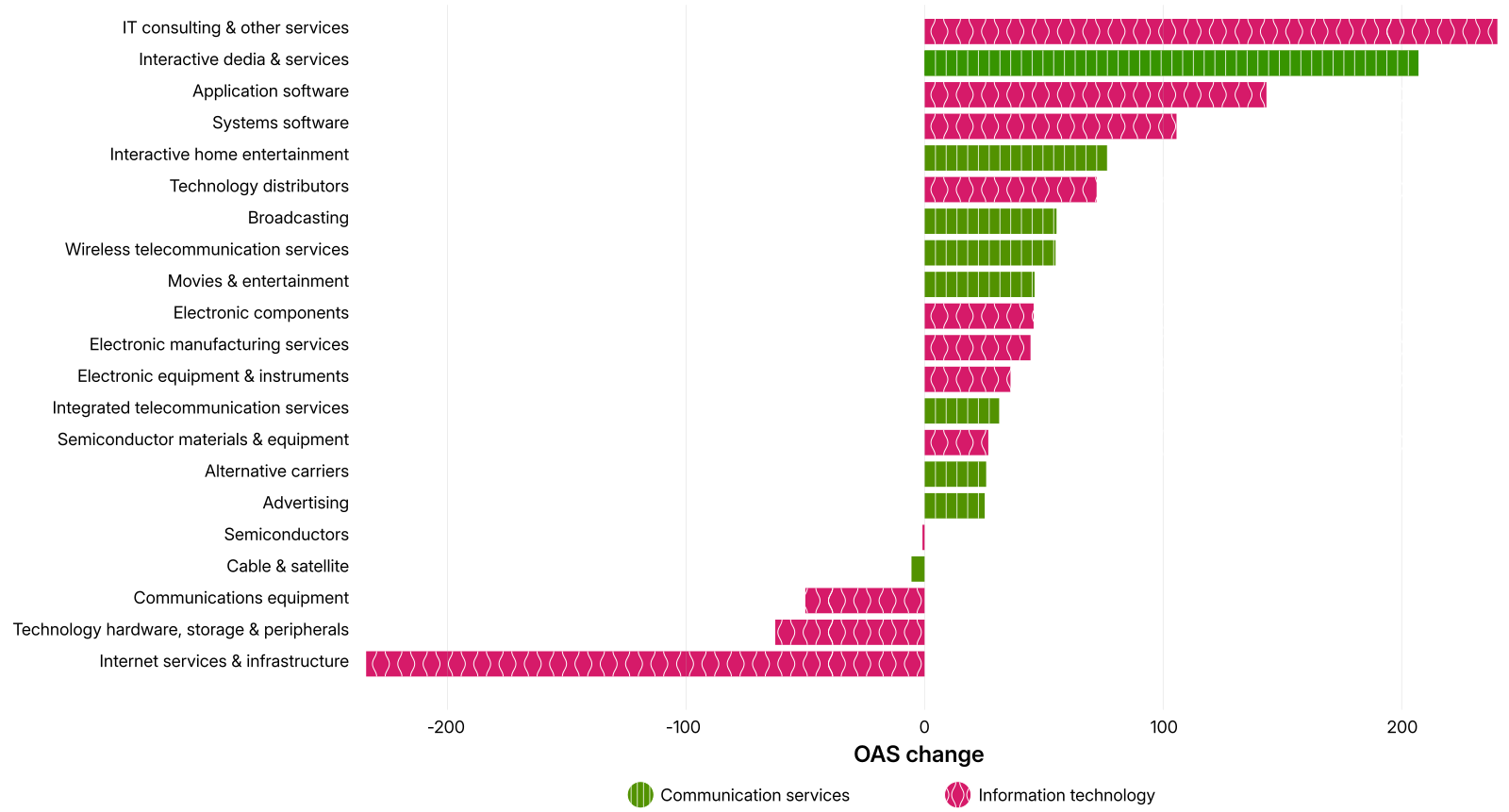
Change in OAS from Dec. 31, 2025, to March 31, 2026, for IT and communication-services sub-industries in the MSCI USD HY Corporate Bond Index calculated based on MSCI Fixed Income Index Calculation Methodology. Sub-industries are derived from GICS®, the industry-classification standard jointly developed by MSCI and S&P Dow Jones Indices.

Subscribe todayto have insights delivered to your inbox.
Run Risk or Rational Repricing? Private Credit’s Software Stress Test
The AI update that rattled equity markets in early 2026 also exposed a fault line in private credit. We examine the selloff in business development companies and the wider implications for investors.
Markets in Focus: AI’s Partners Become its Prey
U.S. software is being repriced as AI's next casualty — but with earnings forecasts still rising, the market may be moving far ahead of the disruption it fears.
Fixed Income Indexes
Access broad fixed income coverage in developed and emerging markets, with frameworks built to align with sustainability and climate goals across equities and bonds.
1 "Tech, Software, and BDCs: Navigating Volatility and AI Disruption in Investment Grade Credit," J.P. Morgan Asset Management, Feb. 10, 2026.
The content of this page is for informational purposes only and is intended for institutional professionals with the analytical resources and tools necessary to interpret any performance information. Nothing herein is intended to recommend any product, tool or service. For all references to laws, rules or regulations, please note that the information is provided “as is” and does not constitute legal advice or any binding interpretation. Any approach to comply with regulatory or policy initiatives should be discussed with your own legal counsel and/or the relevant competent authority, as needed.