
Carbon Credits Come of Age in 2025
- The value of the primary global carbon-credit market remained steady last year at just over USD 1.4 billion, marking the fourth consecutive year at around this level. Global carbon-credit retirements rose 3% year on year to match 2021’s record high.
- Beneath this stability, however, underlying trends shifted. Rising prices and stronger demand for higher-quality credits helped offset weaker performance among lower-quality projects.
- This bifurcation and shift toward higher-quality credits is a positive sign for future growth. Our projections suggest the market could be worth USD 5 to 20 billion by 2030 and USD 60 to 270 billion by 2050.
As of Dec. 31, 2025, more than 10,200 projects were registered across the 18 major carbon-credit registries tracked by MSCI. These projects issued 294 million tonnes of carbon-dioxide equivalent (MtCO2e) of credits during the year and more than 2.6 billion credits in total since the Paris Agreement was signed in late 2016.
On the demand side, 202 MtCO2e of credits were retired, typically because corporate issuers chose to do so voluntarily as part of their climate strategies or because credits were transferred for use in compliance obligations. As the chart below shows, following a period of steady growth through 2021, retirements have remained relatively stable over the past four years, with this trend continuing into 2025.
Around 10% of credits retired last year were associated with emissions removals, while the remaining 90% came from emissions-reduction activities. This was broadly consistent with the split observed in 2024. Nearly all removal-based retirements were sourced from nature-based projects. Meanwhile, demand for renewable-energy credits continued to decline in 2025, accounting for less than a quarter of retirements, down from more than a third in 2021 and 2022.
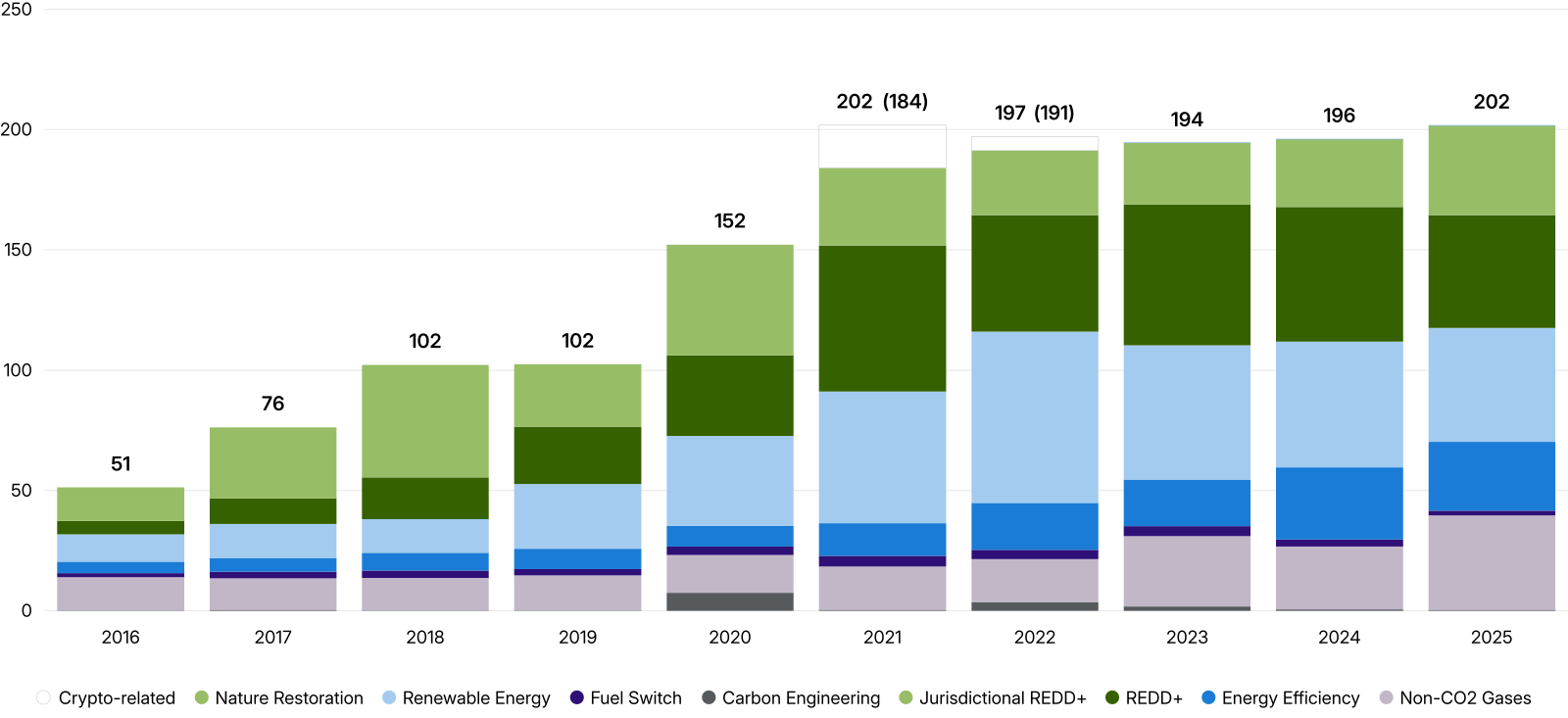
Figures include credits transferred into the California Cap-and-Trade Program. Registries covered: ACR, ART Trees, BioCarbon Standard, CAR, Carbon Standards International, Climate Forward, CDM (NDC-eligible credits only), EcoRegistry, eva, GCC, Gold Standard, Isometric, JCM, Puro Earth, UK Peatland, UK Woodland Carbon Code and Verra. Source: MSCI Carbon Markets
Flight to quality continues
On the pricing side, the annual average MSCI Global Carbon Credit Price Index declined slightly to USD 3.5 per tonne of CO2 equivalent (tCO2e) in 2025, down from USD 4.3 the previous year. At the same time, a stronger focus on credit integrity supported higher prices for higher-rated credits, with the MSCI Rated BBB and Above Index rising from USD 5.6 in 2024 to USD 6.8 in 2025, an increase of more than 20% year on year.
In contrast, prices in the MSCI Rated BB and Below Index moved in the opposite direction. As a result, the average spread between MSCI’s quality-split indexes widened to USD 5.1 in 2025, up from USD 2.9 in 2024. By year-end, that spread had reached over USD 7.0, implying a premium of around 360% for higher-quality credits.
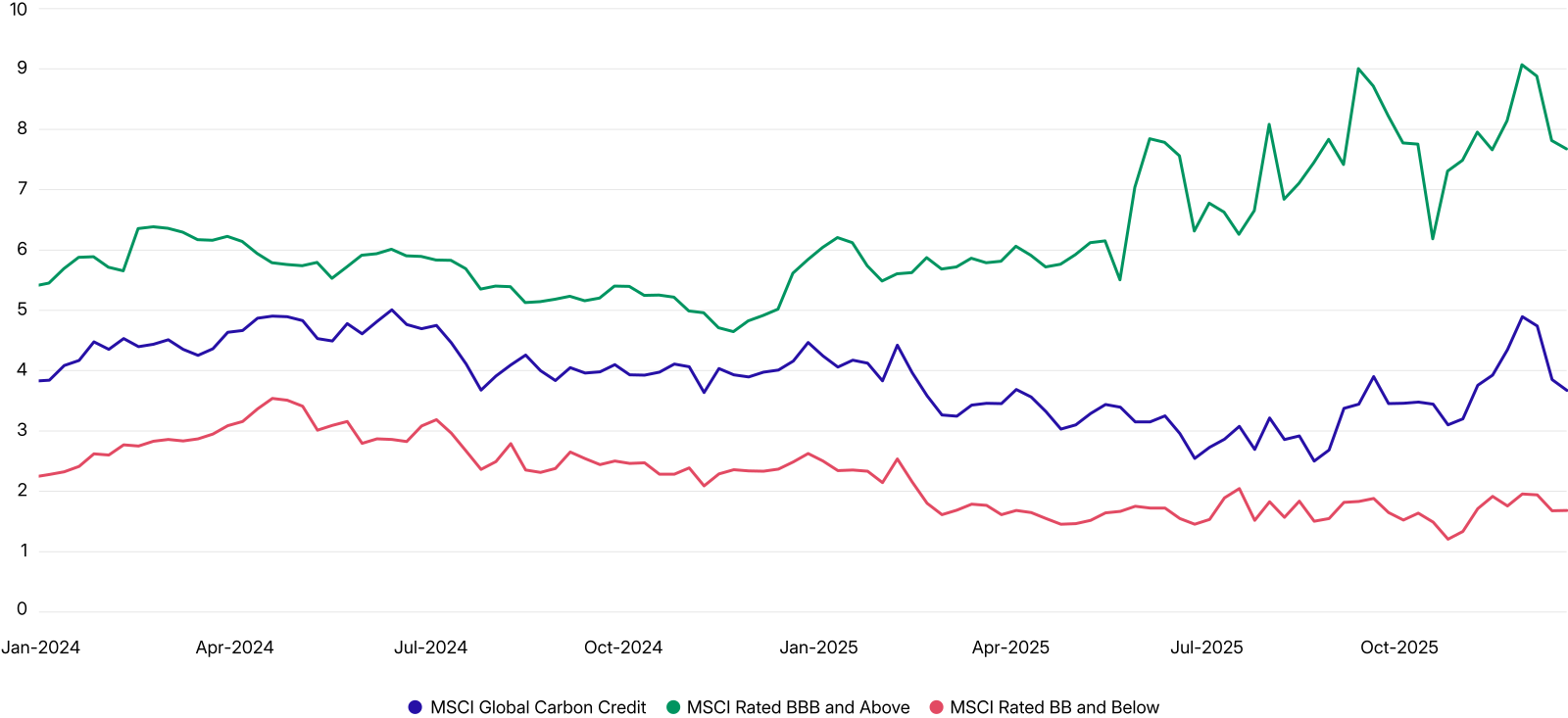
Source: MSCI Carbon Markets
Another steady year, with strengthening signals
As a result, the value of the primary carbon-credit market — calculated as total credits retired multiplied by MSCI’s estimated price of credits at the time of purchase — remained broadly unchanged in 2025 at around USD 1.4 billion.1 Despite volatility across other commodity and financial markets over the same period, 2025 marked the fourth consecutive year in which the carbon market held steady in USD terms.
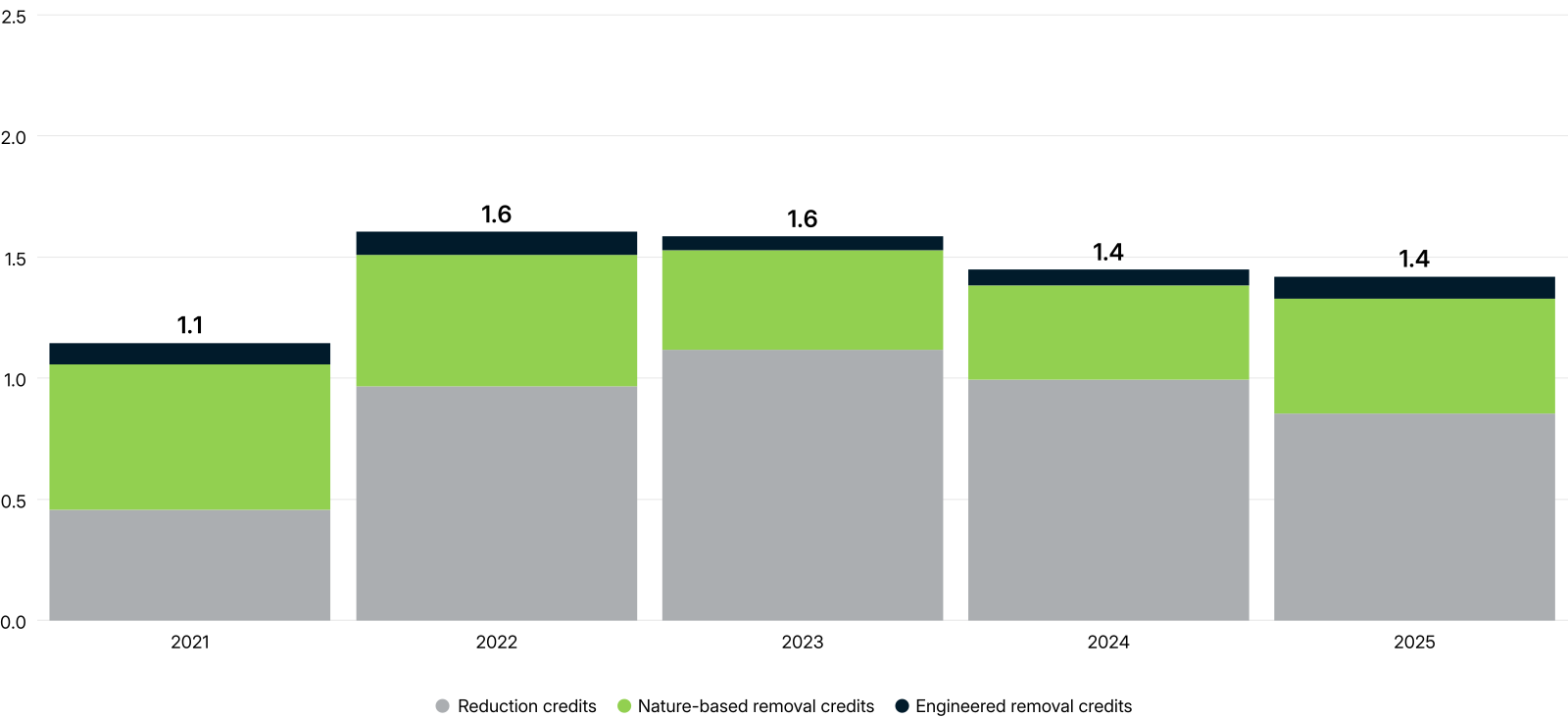
Source: MSCI Carbon Markets
Despite this stable topline, several underlying trends are beginning to reshape market dynamics and could support future growth. One such trend, reflected in pricing developments, is the rising market value of higher-quality project types, including carbon engineering and nature restoration. Growth in carbon engineering was driven by a sharp increase in credit retirements related to building materials, while nature-restoration credit retirements saw increases in both volumes and prices. By contrast, lower-quality segments continued to contract, with the market size for renewable-energy projects falling more than 25% year on year, despite higher retirement volume.
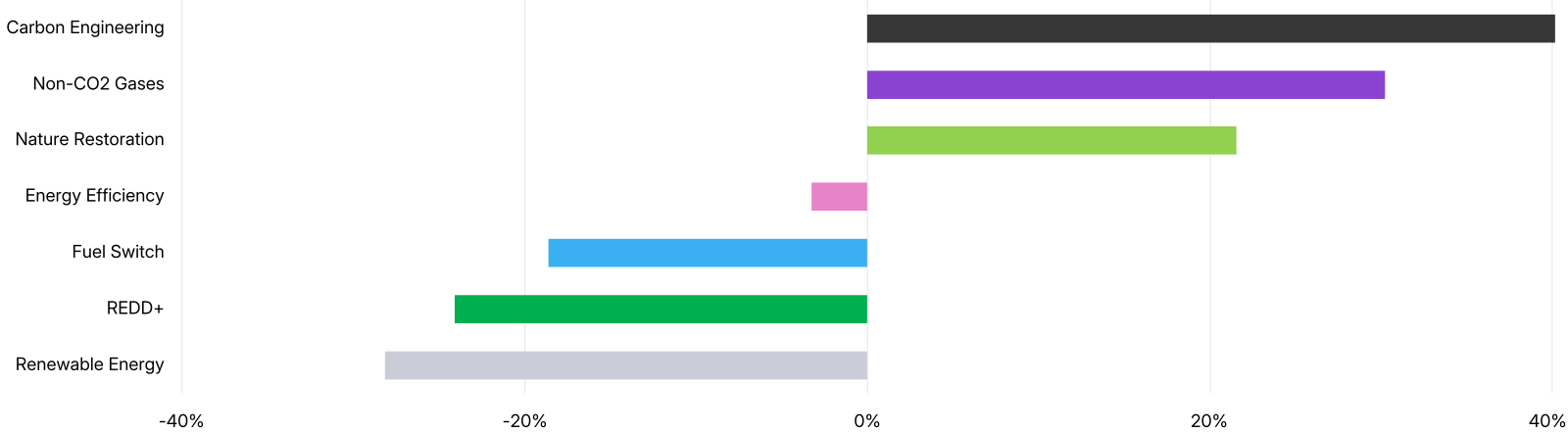
Source: MSCI Carbon Markets
Projected market growth: Steady in near term and stronger expansion as demand broadens
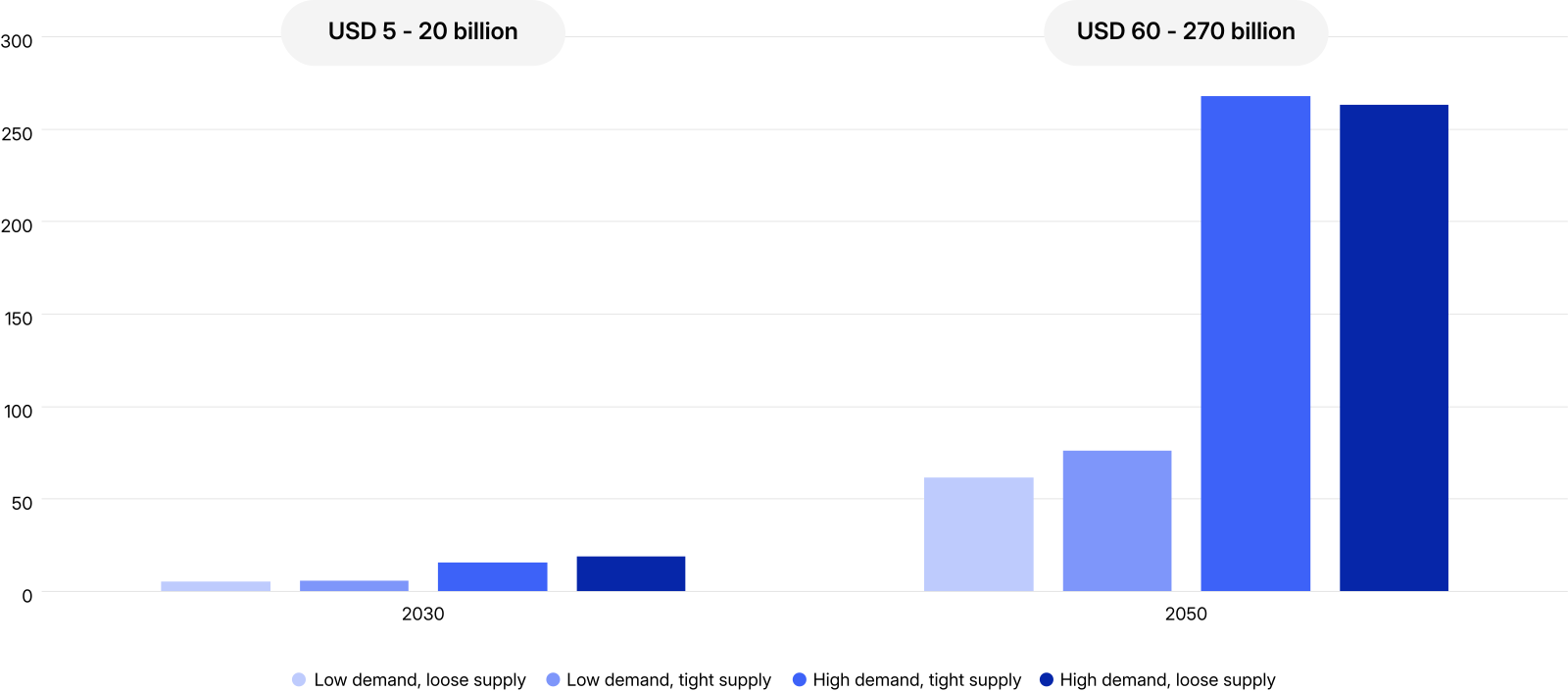
MSCI Carbon Markets modeling suggests that the value of carbon credits retired globally could begin to rise gradually in the second half of the 2020s, before accelerating thereafter.
Source: MSCI Carbon Markets
By 2030, the market begins to diverge more clearly across modeled scenarios. Depending on demand strength and the degree to which high-quality supply becomes constrained, the global carbon-credit market could be worth between USD 5 and 20 billion (in 2025 prices).
Several structural factors could support this growth. MSCI’s corporate database shows there are 1,300 companies that have committed to achieving carbon neutrality by 2030 or earlier. In addition, more than 12,000 companies now have a committed or approved Science Based Targets initiative (SBTi) emissions reduction target — an increase of nearly 70% over the past 12 months. As these targets approach, companies are encouraged to compensate for their residual emissions, which could pave the way for greater use of the carbon market. Buyers are also continuing to shift toward higher-quality and removal-based credits, which typically command higher prices and therefore contribute more to overall market value.
New sources of demand are also strengthening the long-term outlook. The Carbon Offsetting and Reduction Scheme for International Aviation (CORSIA) will enter its second compliance phase in 2027, introducing more consistent demand from international aviation. At the same time, demand from regulated programs is increasing as companies use carbon credits to offset carbon taxes or meet obligations within emission-trading schemes.
MSCI modeling suggests demand could reach between 45 and 180 MtCO2e by 2030 as schemes such as California’s Cap-and-Trade Program and Australia’s Safeguard Mechanism scale and as new national schemes start up. In parallel, sovereign governments are assessing the role of carbon credits to support their Nationally Determined Contribution (NDC) targets and potential Article 6 arrangements. Together, these developments broaden and stabilize future demand beyond the traditional corporate base.
The widening divergence across scenarios over time highlights the growing importance of credit quality. In scenarios where buyers strongly prefer high-integrity credits, overall market value grows more quickly because buyers are willing to pay higher prices for verified durability and permanence. By contrast, lower-quality outcomes, illustrated by the loose-supply scenarios in the chart above, show slower value growth, reflecting lower prices and weaker market confidence.
By 2050, the range of projected market outcomes could expand significantly. Depending on demand conditions and the degree of supply tightness, the value of retired credits could range from USD 60 to 270 billion. MSCI modeling suggests that removal credits, including engineered solutions such as direct air capture and biochar, account for a growing share of this value, reflecting both their higher prices and their closer alignment with long-term net-zero strategies.
Investor implications
Overall, the long-term outlook points to a market that becomes larger, more differentiated by credit quality, increasingly shaped by the need for higher quality and supported by a broader set of buyers including companies, regulated sectors and sovereigns. For investors, the widening dispersion in market outcomes highlights the increasing role of credit quality, project type and exposure to removal-based solutions, as long-term value is likely to accrue disproportionately to higher-integrity segments of the market.





Subscribe todayto have insights delivered to your inbox.
2025 State of Integrity in the Global Carbon-Credit Market
Our 2025 report on the global carbon-credit market shows rising demand for high-integrity credits with stronger ratings, higher prices and new risk frameworks are shaping a more credible market.
MSCI Carbon Project Ratings
Assess the integrity of more than 4,000 carbon projects with our independent, in-depth assessments used by investors, carbon credit buyers and developers market-wide. As of Sept. 18, 2024.
Carbon Market Forecasts
Explore carbon market supply, demand and price projections to 2050. Use interactive tools to generate custom forecasts for CDR and CORSIA-eligible carbon credits.
1 This definition of primary market size does not include the secondary trading of credits, i.e., credits that change hands more than once.
The content of this page is for informational purposes only and is intended for institutional professionals with the analytical resources and tools necessary to interpret any performance information. Nothing herein is intended to recommend any product, tool or service. For all references to laws, rules or regulations, please note that the information is provided “as is” and does not constitute legal advice or any binding interpretation. Any approach to comply with regulatory or policy initiatives should be discussed with your own legal counsel and/or the relevant competent authority, as needed.