
Repositioning for Slower Growth: The Case for Quality
- Over the last 25 years, quality indexes have outperformed the market, driven by robust balance sheets and steady profits, with the widest edge when growth slows and yields fall.
- For investors concerned about quality’s muted performance in 2025, our analysis shows that performance was driven less by deteriorating fundamentals and more by temporary economic influences.
- As macro momentum weakens and monetary policy starts to ease, adding quality to portfolios could support performance going forward.
Global equity markets have delivered strong returns over 2025: As of Nov. 30, the MSCI ACWI Index is up 21% in USD, despite bouts of volatility, and economic and political uncertainty. As macro and rate uncertainty returns to shape the market environment, investors are reassessing which areas might best sustain earnings in a slower-growth environment.1 MSCI’s quality indexes, in which companies are selected based on profitability, balance-sheet strength and earnings stability, have historically outperformed the market during periods of higher volatility and falling growth.
In this blog, we review the behavior of quality companies within each industry across market environments, the sector-relative drivers of performance year to date, and how the evolving macroeconomic backdrop is aligned with historically favorable characteristics for quality as an investment approach.2
To understand quality’s long-term behavior, we use the MSCI Sector Neutral Quality Indexes to separate the impact of differences in company-level fundamentals within sectors and differences in sector weights. This distinction has become increasingly important with the rise in share of global markets taken by technology and health-care companies as well as adjusting in broad terms for different business models.
The MSCI USA Sector Neutral Quality and World ex USA Sector Neutral Quality Indexes have outperformed their respective parent indexes by approximately 50 and 165 basis points (bps) annually since 1998, with risk lower by about 50 and 14 bps, respectively.3 Thus, quality has shown a steady pattern of resilient performance in the long term. Among the defining descriptors of quality, profitability (as measured by return-on-equity) has been the strongest and most persistent driver of returns, while low leverage and stable earnings have moderated losses during periods of market stress.
During periods of heightened market volatility, the MSCI USA Sector Neutral Quality and the World ex USA Sector Neutral Quality Indexes outperformed their respective benchmarks by an average of 23 and 31 bps per month, underscoring quality’s defensive behavior across regions.4
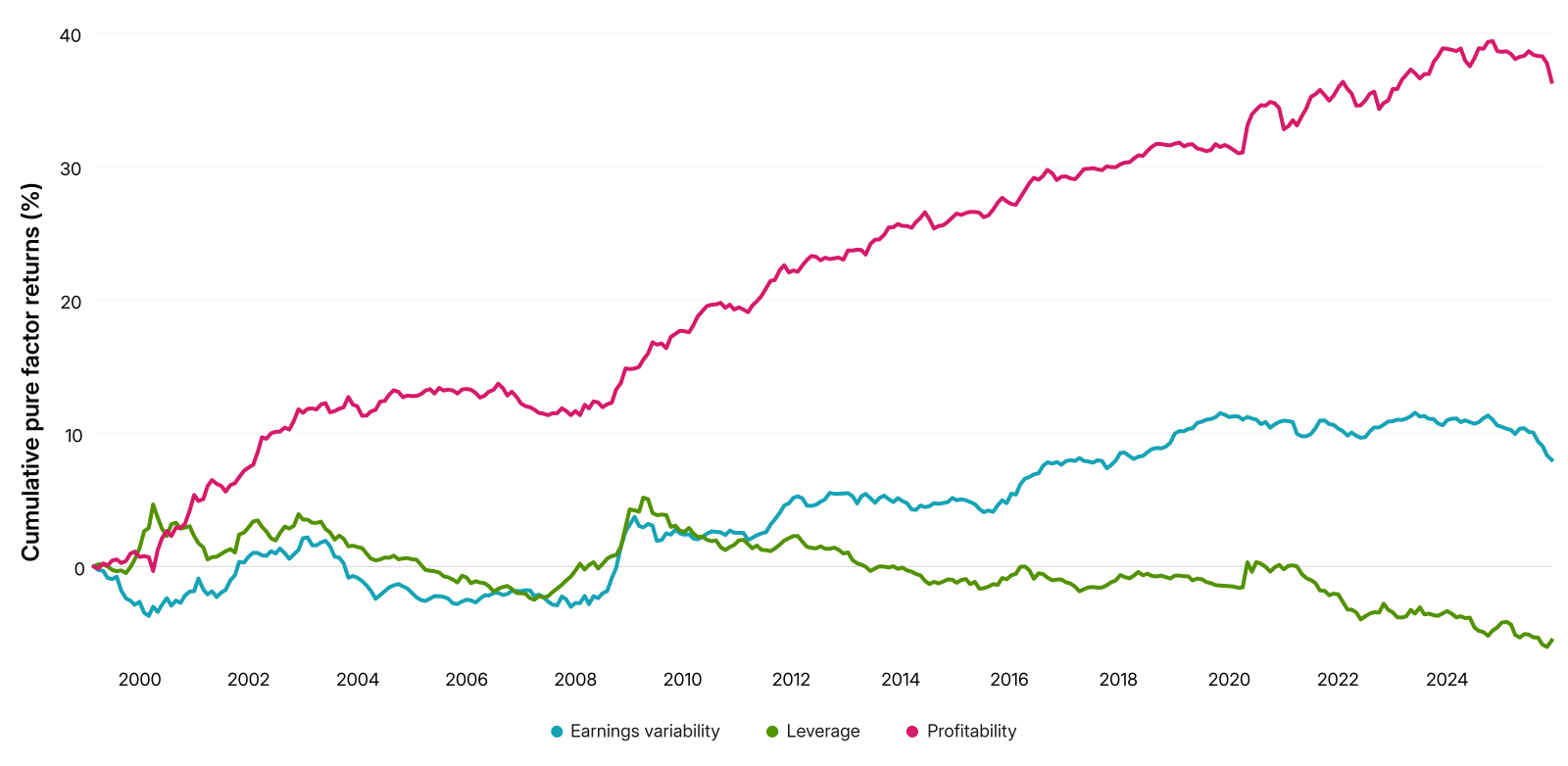
Time period: Dec. 31, 1999 to Oct. 31, 2025. The plot shows the cumulative pure factor returns from the MSCI EFMGEMLT Model for the descriptors within quality. Earnings variability and leverage returns are inverted to show pure factor returns for firms with low earning variability and low leverage.
When we focus in on 2025, we observe that these two indexes have trailed their parent benchmarks by 6.4% and 5.5% for the USA and World ex USA, respectively. Looking at a factor performance attribution, we see that the underperformance is mainly stemming from styles, dominated by profitability.
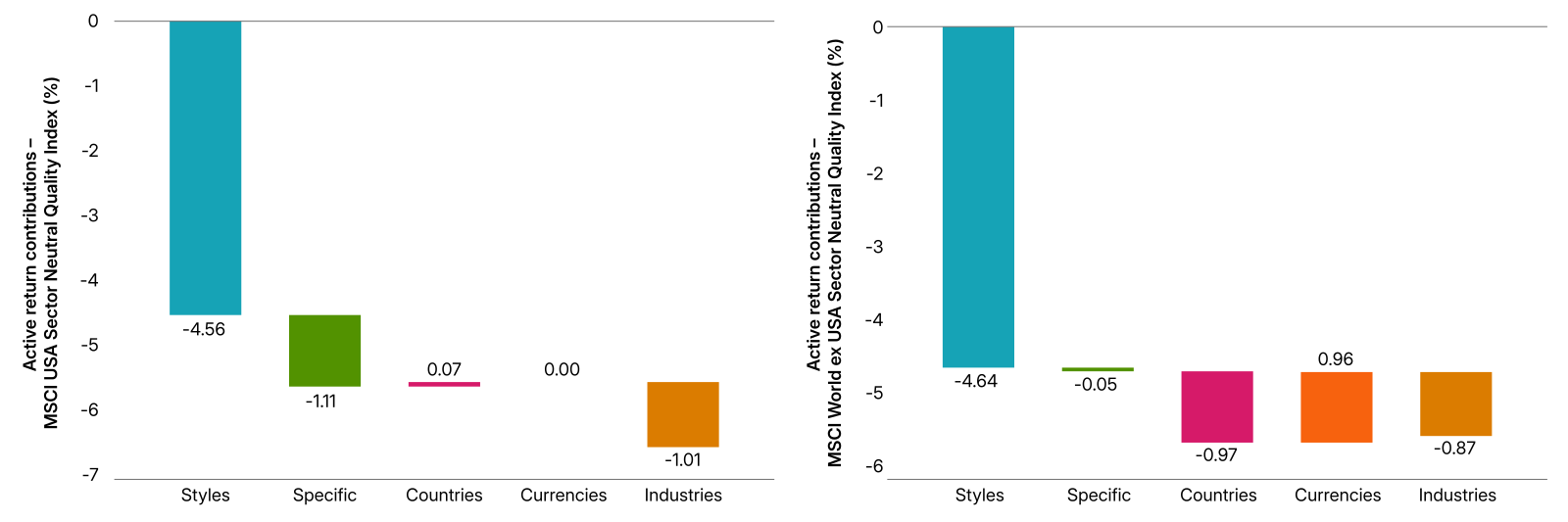
Performance attribution is calculated using MSCI EFMGEMLTL. The plot shows the active return contributions (%) relative to the respective parent indexes.
To better understand the performance contributors, we then reviewed the fundamental performance attribution to identify which underlying drivers — such as sales growth, margins and valuation changes — contributed to returns. Specifically, the USA Sector Neutral Quality Index gained due to positive contributions from valuation changes and sales growth, mostly due to AI and high-growth pharmaceutical companies. The main drag on returns came from more limited profit-margin expansion.
For World ex USA, while the broader market was less affected by AI momentum, it was hit by tariffs that affected sales growth and led to lower gains from valuation changes. Additionally, the higher starting multiples of World ex USA Sector Neutral Quality Index vs. its parent left less room for valuation rerating.5
Time period: Dec. 31, 2024 to Oct. 31, 2025. Performance contribution for year-to-date returns.
The foreign-sensitivity factor exposure of the MSCI World ex USA Sector Neutral Quality Index indicates it has had greater-than-benchmark exposure to firms with international revenue, making the index more sensitive to tariff-related risks.6 Indeed, these export-related factors have delivered negative returns year to date (a weakening U.S. dollar has compounded the impact).
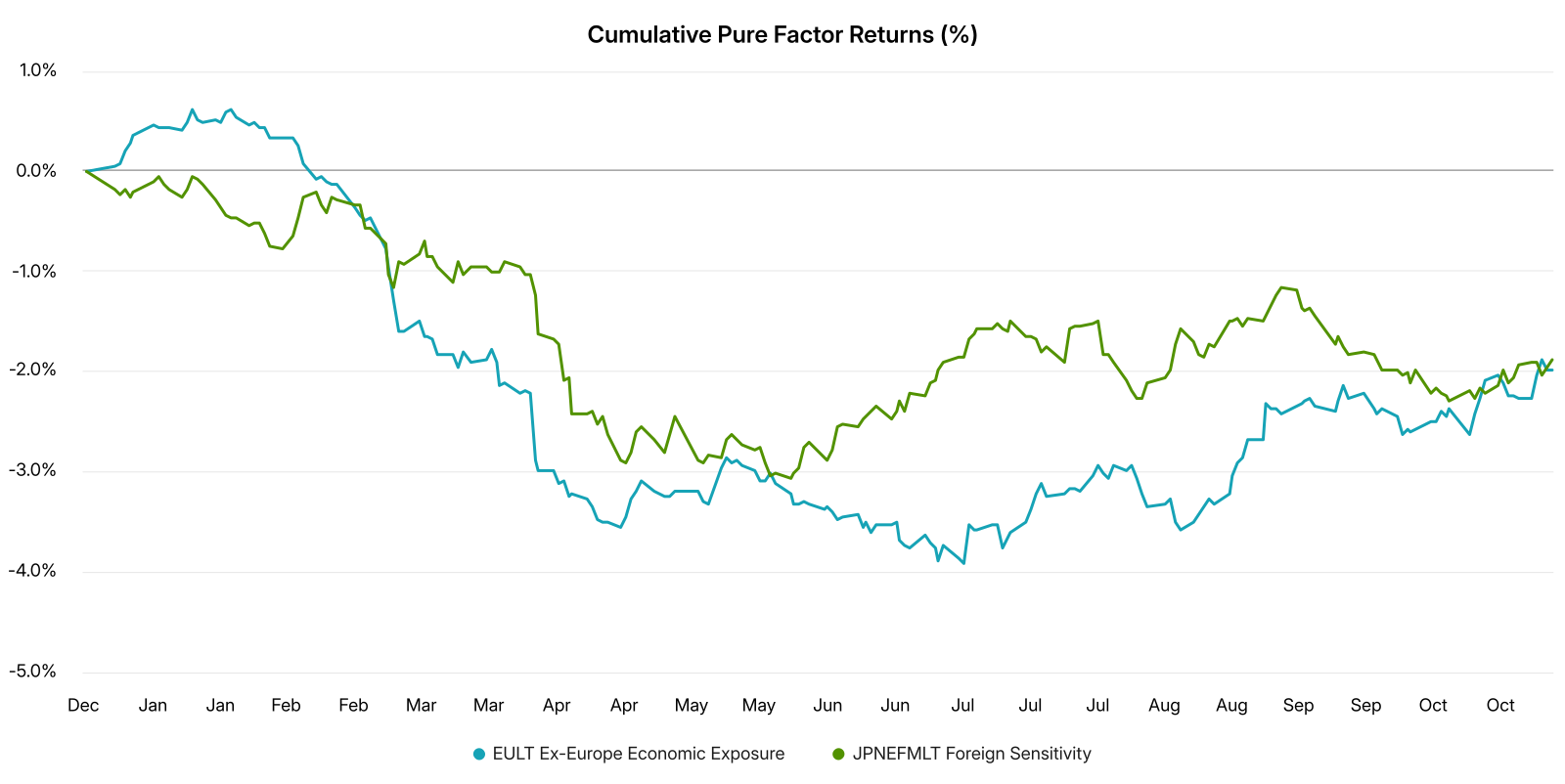
Time period: Jan. 1, 2025 to Oct. 31, 2025. The plot shows the year-to-date cumulative pure factor returns of ex-Europe economic exposure from the MSCI EULT model and Japan foreign-sensitivity factor from the MSCI JPNEFMLT model.
To understand how different macro regimes affected quality’s returns, we calculated the active return of the MSCI Sector Neutral Quality Indexes in different growth and rate environments.
We found that the indexes’ relative performance has been strongest when both growth and yields declined. These environments have also historically coincided with periods when profitability-factor returns have been strongest.
Since the start of 2023, the economy has remained in a rising-growth phase, which has coincided with a period during which Sector Neutral Quality has lagged its parent indexes.7
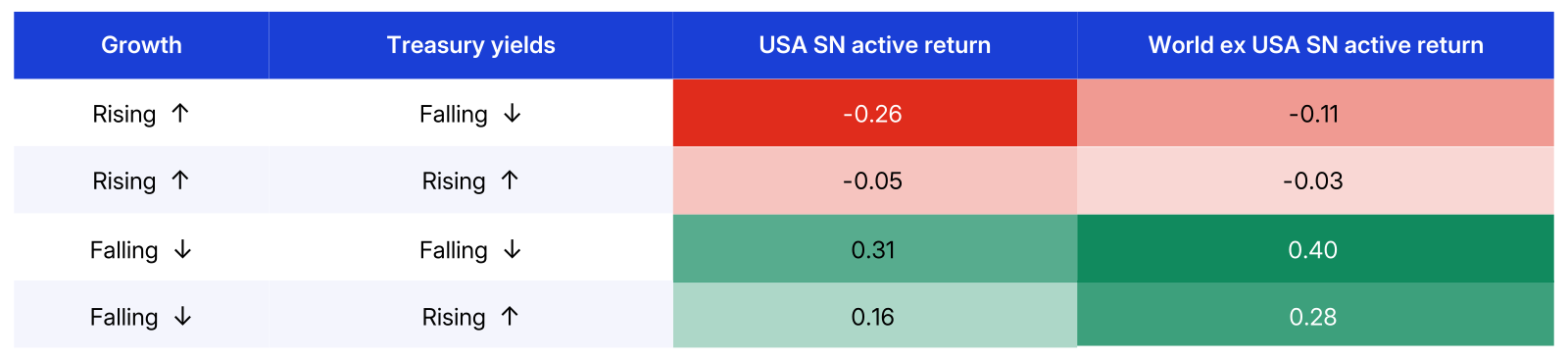
Time period: Jan. 29, 1999 to Oct. 31, 2025. Index returns are gross in USD. The table shows the active returns of the sector-neutral quality indexes over their respective parent indexes conditioned by Treasury yields (as proxied by the 10-year Treasury’s yield) and growth (proxied by the OECD’s composite leading indicator).
As the surge in AI-driven capital expenditure moderates, tariffs filter through global supply chains and growth indicators soften, the environment that weighed on quality’s performance this year may begin to ease. If slowing activity prompts further monetary easing, the environment would more closely resemble historical periods in which quality has outperformed. With its emphasis on durable profitability, disciplined balance sheets and earnings stability, the quality factor may again offer investors a resilient anchor when the cycle turns.



Subscribe todayto have insights delivered to your inbox.
Balancing Risk and Return: Gold and Digital Assets in a 60/40 Portfolio
Positive equity-bond correlations have called into question the traditional 60/40 portfolio. Adding gold for resilience and digital assets for growth can strengthen diversification across cycles.
Scenario Analysis: What Could a US Tech Correction Look Like?
The AI-fueled tech rally has left markets top-heavy. What happens if investor confidence falters? Explore how a U.S. tech correction could affect global industries — and what might stay resilient.
Quality Indexes
MSCI Quality Indexes are factor indexes designed to represent the performance of companies with durable business models and sustainable competitive advantages.
1 “World Economic Outlook: Global Economy in Flux, Prospects Remain Dim,” International Monetary Fund, October 2025.
2 We use the MSCI Sector Neutral Quality Indexes, which align each sector’s weight with that of the parent cap-weighted index, to examine the performance of the quality factor in this context.
3 Nov. 30, 1998 to Oct. 31, 2025. Returns in gross USD.
4 We define heightened volatility as months when the Cboe VIX index is above the 95th percentile based on the full time period considered.
5 Price to book of 3.1 vs. 2 and price to earnings of 17.5 to 16.6.
6 We look at the ex-Europe Economic Exposure factor from the MSCI EULT model and the Foreign Sensitivity factor of the JPNEFMLT model.
7 As indicated by the OECD Composite Leading Indicators. Source: OECD
The content of this page is for informational purposes only and is intended for institutional professionals with the analytical resources and tools necessary to interpret any performance information. Nothing herein is intended to recommend any product, tool or service. For all references to laws, rules or regulations, please note that the information is provided “as is” and does not constitute legal advice or any binding interpretation. Any approach to comply with regulatory or policy initiatives should be discussed with your own legal counsel and/or the relevant competent authority, as needed.