
From Awareness to Action: Assessing Nature-Related Physical Risks
Mentioned in this paper:
MSCI GeoSpatial Asset Intelligence | MSCI Biodiversity Risk Metrics | MSCI Nature Risk Matrix Methodology
Preview
Nature-related physical risks are inherently local: the same business dependency can create very different financial exposure depending on where a company operates. This research explores how investors can move from understanding that principle to assessing it systematically.
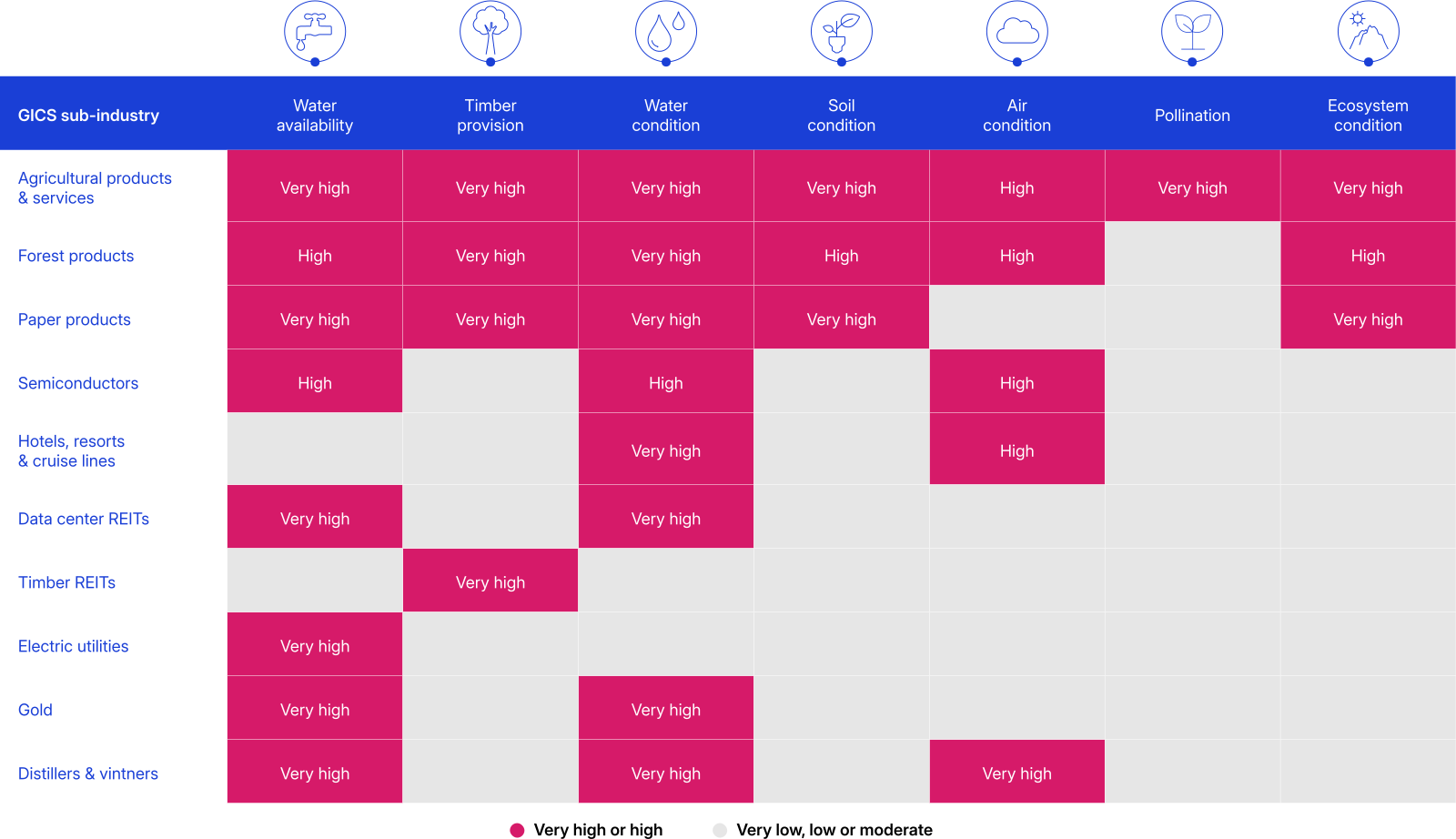
Combining WWF’s Biodiversity Risk Filter with MSCI’s GeoSpatial Asset Intelligence, we examine nature-related physical risks across 163 Global Industry Classification Standard (GICS®) sub-industries and seven risk types.1 The analysis identifies 23 sub-industries with high exposure across multiple risk categories and introduces the MSCI Nature Risk Matrix, a framework designed to translate location-specific insights into signals that can support portfolio analysis and index construction.



Read the full paper
Provide your information for instant access to our research papers.
MSCI Sub-Industries Nature Exposure Indexes Methodology
An index approach to reducing exposure to nature-related physical risks.
From Awareness to Action: Sector-Based Biodiversity Risk in Investments
Biodiversity decline isn’t just environmental — it’s financial. Identifying biodiversity-loss drivers helps investors strengthen resilience and start to unlock upside in a nature-positive transition.
Water Scarcity Already Costs Companies USD 485 Billion a Year
Which companies face the greatest financial risks from water scarcity? New MSCI analysis identifies where losses are concentrated across operations and supply chains.
1 GICS is the industry-classification standard jointly developed by MSCI and S&P Dow Jones Indices.
The content of this page is for informational purposes only and is intended for institutional professionals with the analytical resources and tools necessary to interpret any performance information. Nothing herein is intended to recommend any product, tool or service. For all references to laws, rules or regulations, please note that the information is provided “as is” and does not constitute legal advice or any binding interpretation. Any approach to comply with regulatory or policy initiatives should be discussed with your own legal counsel and/or the relevant competent authority, as needed.