
AI’s Job Prospects: How Much Labor Could AI Automate
How much of a company’s business could AI automate? The answer depends on whether you mean AI as it is today, or AI as it could be tomorrow. Even the least exposed companies today could automate almost 20% of their labor costs by focusing on language-heavy activities. Once AI can interact with the physical world at scale, however, that share rises to almost 50%.
MSCI AI Disruption Potential draws on established occupational taxonomies and frameworks such as the OECD AI Capability Indicators to define three AI-capability scenarios.
The core “language capabilities” scenario reflects AI as we know it today: able to work with text, numbers and media, but with little access to the physical world. “Monitoring capabilities” adds the ability to monitor physical conditions and processes in real time through autonomous sensors. The most advanced scenario, “physical capabilities,” assumes AI can manipulate real-world objects.
By mapping these capabilities to tens of thousands of tasks carried out by workers today, the model estimates the share of labor costs companies could potentially avoid under each scenario.
Across around 8,000 global constituents of the MSCI ACWI Investable Market Index, an estimated 44% of employee costs could be automated today, rising to 67% under the physical-capabilities scenario. Even then, human judgment remains the final barrier to full automation: We assume humans continue to make consequential decisions affecting individuals or organizations.
High automation potential does not necessarily translate into higher profits. Some companies could benefit through lower costs, greater productivity and higher margins. Elsewhere, those gains may flow to customers through self-service or to AI-native competitors challenging legacy incumbents.
For investors, assessing AI disruption therefore requires looking beyond what can be automated to who is positioned to capture the value. Regulatory insulation, networks, switching costs and the level of physical assets could all help determine which companies prove most resilient as AI capabilities expand.
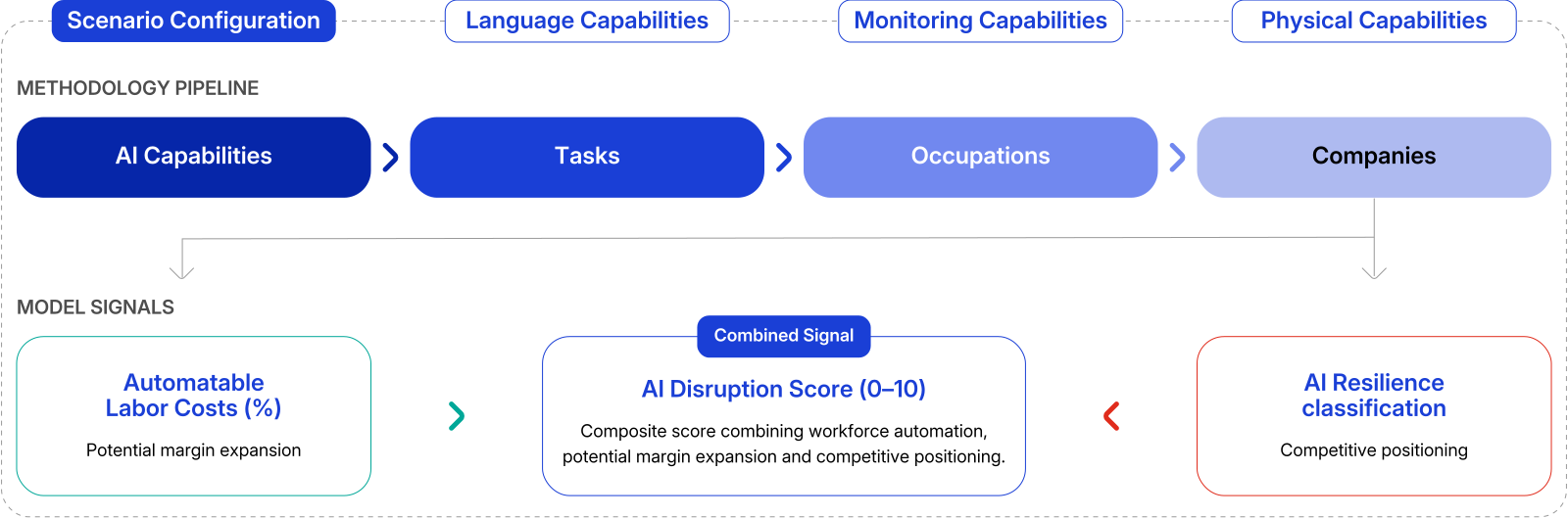
Source: MSCI Solutions, as of August 2026.
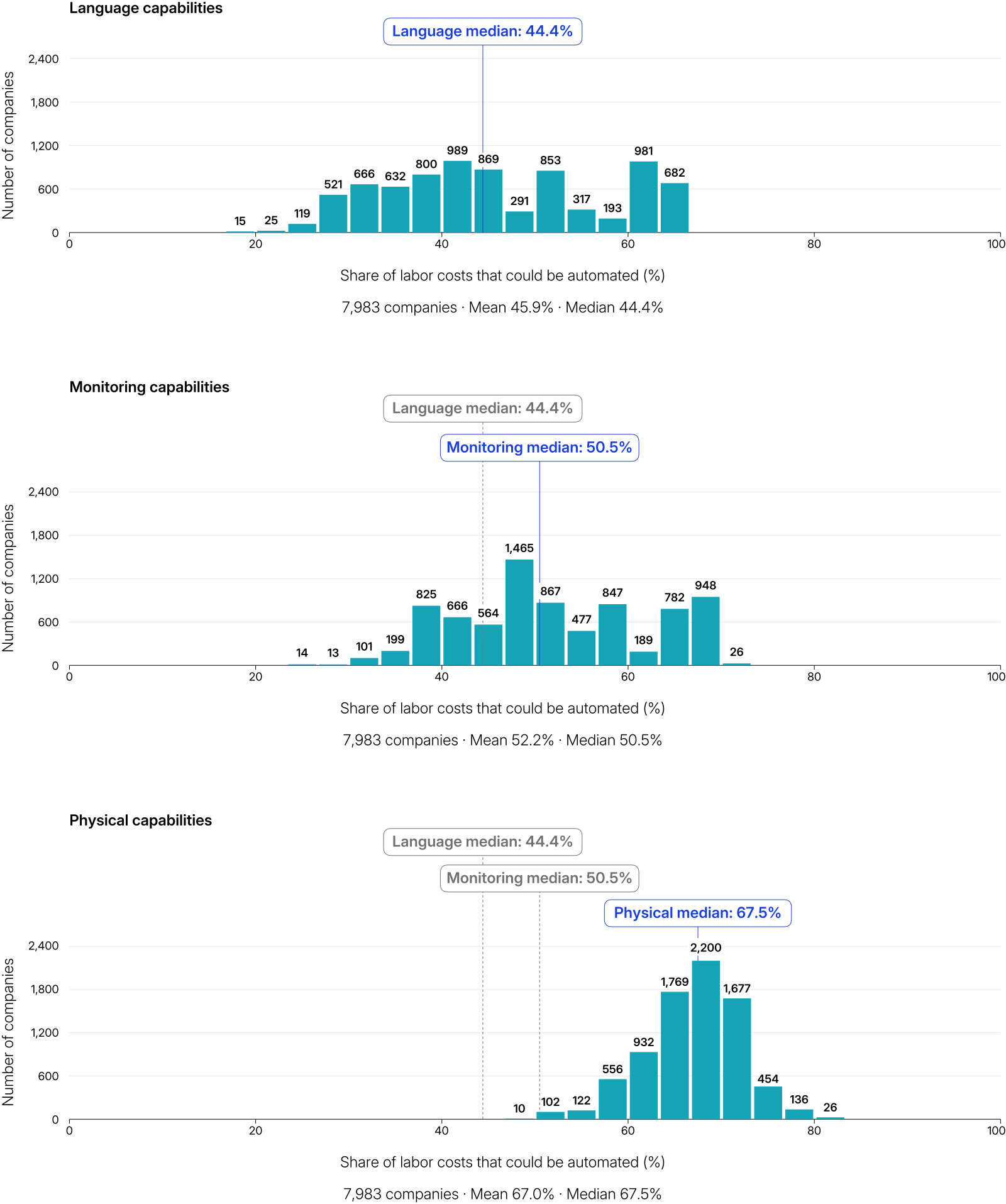
Source: MSCI Solutions, as of August 2026.


Subscribe todayto have insights delivered to your inbox.
Macro Scenarios in Focus: Assessing Portfolio Resilience to AI and Geopolitical Risks
We stress test a diversified portfolio against three macro scenarios: an AI productivity boom, a disorderly AI transition and a supply-side energy squeeze.
Mapping AI Exposure Across Global Markets
AI's geography is more distributed than headlines suggest — we map which economies lead each layer of the value chain and what that means for global equity investors.
Sustainability Solutions
MSCI’s sustainability data, models, ratings and metrics enable you to better manage risk and identify opportunity.
The content of this page is for informational purposes only and is intended for institutional professionals with the analytical resources and tools necessary to interpret any performance information. Nothing herein is intended to recommend any product, tool or service. For all references to laws, rules or regulations, please note that the information is provided “as is” and does not constitute legal advice or any binding interpretation. Any approach to comply with regulatory or policy initiatives should be discussed with your own legal counsel and/or the relevant competent authority, as needed.