
Did Defensive Strategies Dodge the Software Crash? A Real-Time Analysis
On Feb. 3, Anthropic's release of advanced AI automation tools triggered a sharp sell-off in software and information-services stocks. When markets turn volatile, sophisticated investors — from hedge funds to model-portfolio teams — seek real-time insight into performance drivers to gauge risk, decide whether to hedge or rebalance and communicate effectively with their stakeholders.
Tracking defensive strategies in real time
We used the MSCI USA Minimum Volatility Index (Min Vol) as a proxy for defensive investment strategies, and ran an intraday performance attribution using real-time index levels and associated factor returns. As U.S. markets opened, software and semiconductors experienced price declines while the broader market beta remained relatively stable. Min Vol outperformed sharply in this opening hour, benefiting from its underweight to these industries. By mid-morning, the semiconductor sell-off had largely run its course, though software still faced some pressure.
Sector stress turns systemic
The narrative shifted after 11:00 a.m. What began as sector-specific disruption morphed into broader risk-off sentiment. The market-beta factor declined through the early afternoon as the sell-off spread beyond tech and drove further outperformance of Min Vol. A modest beta recovery after 2:00 p.m. and into the close of trading trimmed some of the gains, but its cumulative outperformance remained meaningful.
What real-time attribution reveals
By late morning, investors monitoring markets in real time could identify that the software sell-off was transitioning to broader market weakness. The defensive allocation’s outperformance stemmed initially from sector underweights, then from lower overall beta as weakness broadened.
In an environment of frequent market shocks — whether from AI disruption, geopolitical tensions or policy reversals — waiting for end-of-day data may leave equity investors acting on a significant lag. Real-time index and factor analytics may instead provide the tools for them to better reposition for the investment opportunities that arise, as well as support firmwide and client communication.
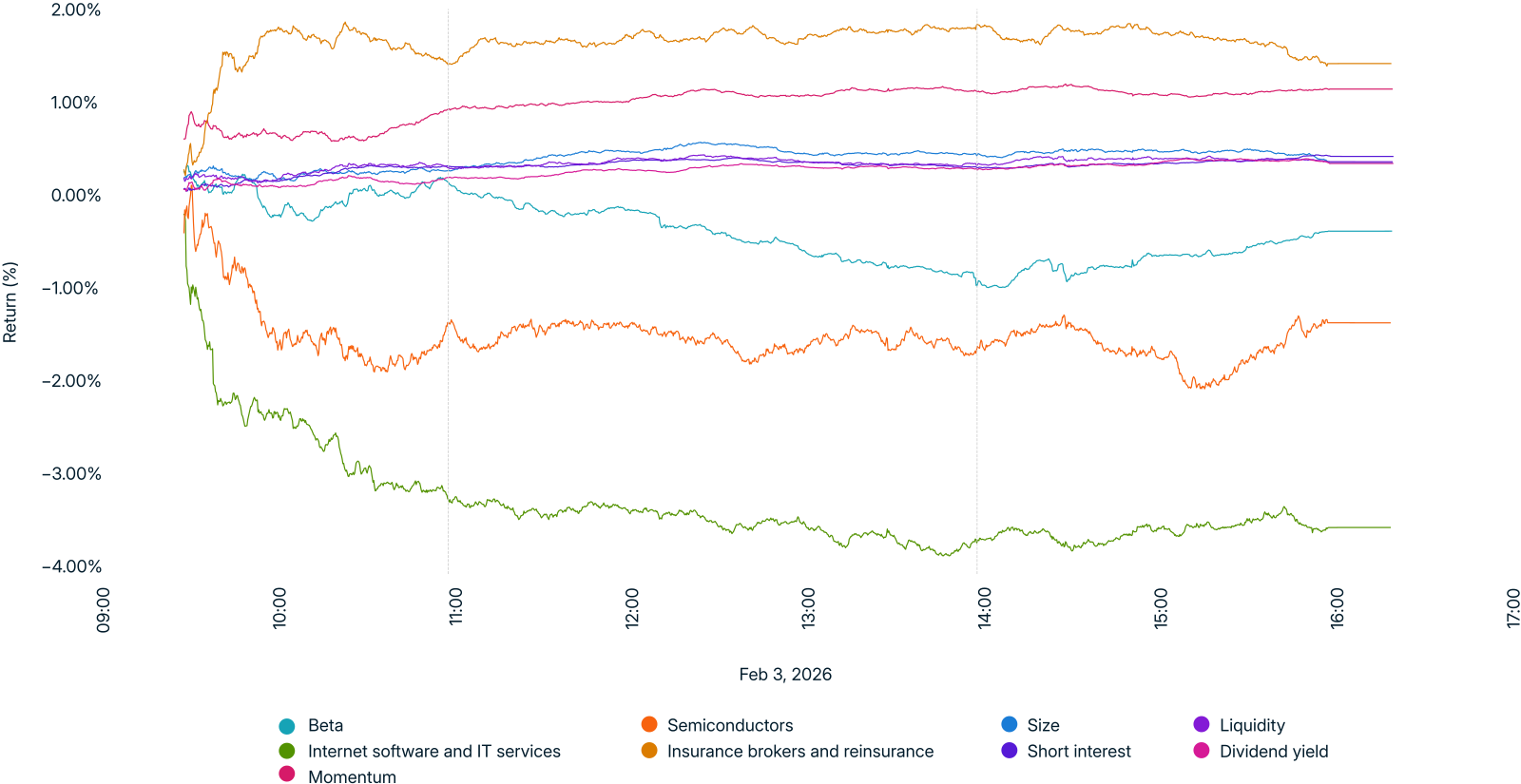
Data as of Feb. 3, 2026. Cumulative real-time pure factor returns from MSCI US Total Market Equity Trading Model. Chart displays factors with the highest cumulative return on Feb. 3.
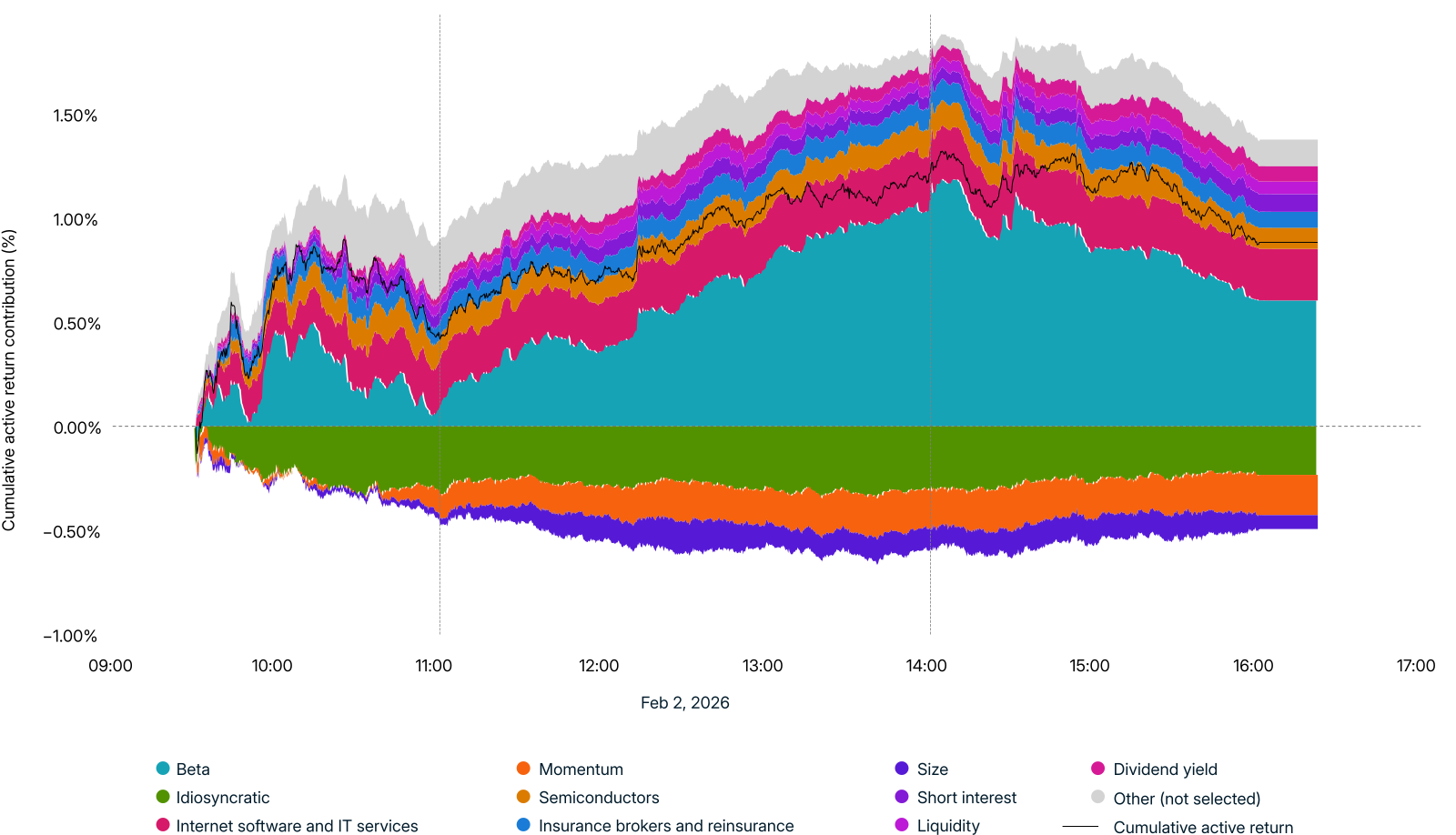
Data as of Feb. 3, 2026. Cumulative real-time active return contribution for the MSCI USA Minimum Volatility Index relative to the MSCI USA Index using the MSCI US Total Market Equity Trading Model. Factor exposures are as of Feb. 2, 2026; factor returns are real-time. Chart displays factors with the highest cumulative return contribution on Feb. 3, 2026.


Subscribe todayto have insights delivered to your inbox.
Factoring in Earnings-Call Sentiment in Real Time
High-frequency factor returns reveal how rapid shifts in sentiment during earnings calls can reshape intraday market dynamics.
Scenario Analysis: When Stocks, Bonds and the Dollar Fall Together
Triple-Red scenarios — when correlations break down and diversification fails — are back. Drawing on historical lessons, we stress test how economic tensions could hit multi-asset-class portfolios.
Minimum Volatility Indexes
Explore our Minimum Volatility Indexes — factor indexes designed to support investors seeking transparent benchmarks for managed volatility equity strategies.
The content of this page is for informational purposes only and is intended for institutional professionals with the analytical resources and tools necessary to interpret any performance information. Nothing herein is intended to recommend any product, tool or service. For all references to laws, rules or regulations, please note that the information is provided “as is” and does not constitute legal advice or any binding interpretation. Any approach to comply with regulatory or policy initiatives should be discussed with your own legal counsel and/or the relevant competent authority, as needed.