
EU ETS Reform Opens the Door to Carbon Credits
Mentioned in this quick take:
Carbon Markets | Carbon Market Forecasts | Policy and Guidance - Carbon Markets
The EU Emissions Trading System (EU ETS), the bloc’s flagship climate policy, has undergone its most significant update since its 2005 launch. For the first time, the reforms allow certain carbon credits to be used toward compliance obligations. Taken together, the package eases the near-term carbon-cost burden on European industry by slowing the tightening of the emissions cap, extending free allocation and delaying the phase-out of free allowances for sectors covered by the Carbon Border Adjustment Mechanism (CBAM).
Demand will take time to emerge
Two measures open the door to carbon credits.
- International credits: an EU-run facility to purchase high-quality international carbon credits, covering up to 2% of the emissions reduction target from 2036 onward.
- Domestic removals: the integration of 250 Mt of permanent domestic removals certified under the Carbon Removals and Carbon Farming (CRCF) certification framework.
Whether these measures translate into meaningful demand largely depends on timing. Introducing international credits could create demand of around 25 Mt/year for Article 6-compliant credits, but not before 2036. By comparison, demand for Article 6 credits under the CORSIA scheme is expected to reach 80-180 Mt/year in 2035.1
The impact of including permanent removals is more uncertain because of their high cost. As shown in the chart, the technologies for direct air capture (DAC) and bioenergy with carbon-capture storage (BECCS) remain significantly more expensive than EU allowances (EUAs). Although costs are expected to decline, our analysis suggests DAC could still cost USD 300-400/t and BECCS USD 200-340/t by 2040, compared with an expected EUA price of around USD 160/t. While CRCF-certified biochar removal is more cost-competitive, the EU ETS review does not admit it for compliance.
CBAM could accelerate demand
Another near-term source of demand may emerge through CBAM. Draft rules currently under consultation recognize importers for using domestic carbon credits toward carbon-pricing obligations in their home country. They would also allow importers to use international credits eligible under Article 6 for up to 10% of their obligations. We estimate this could bring forward as much as 70 Mt/year of Article 6 demand ahead of the ETS timeline.
Overall, the reforms provide positive momentum for the global carbon-credit market in both the near and longer term.
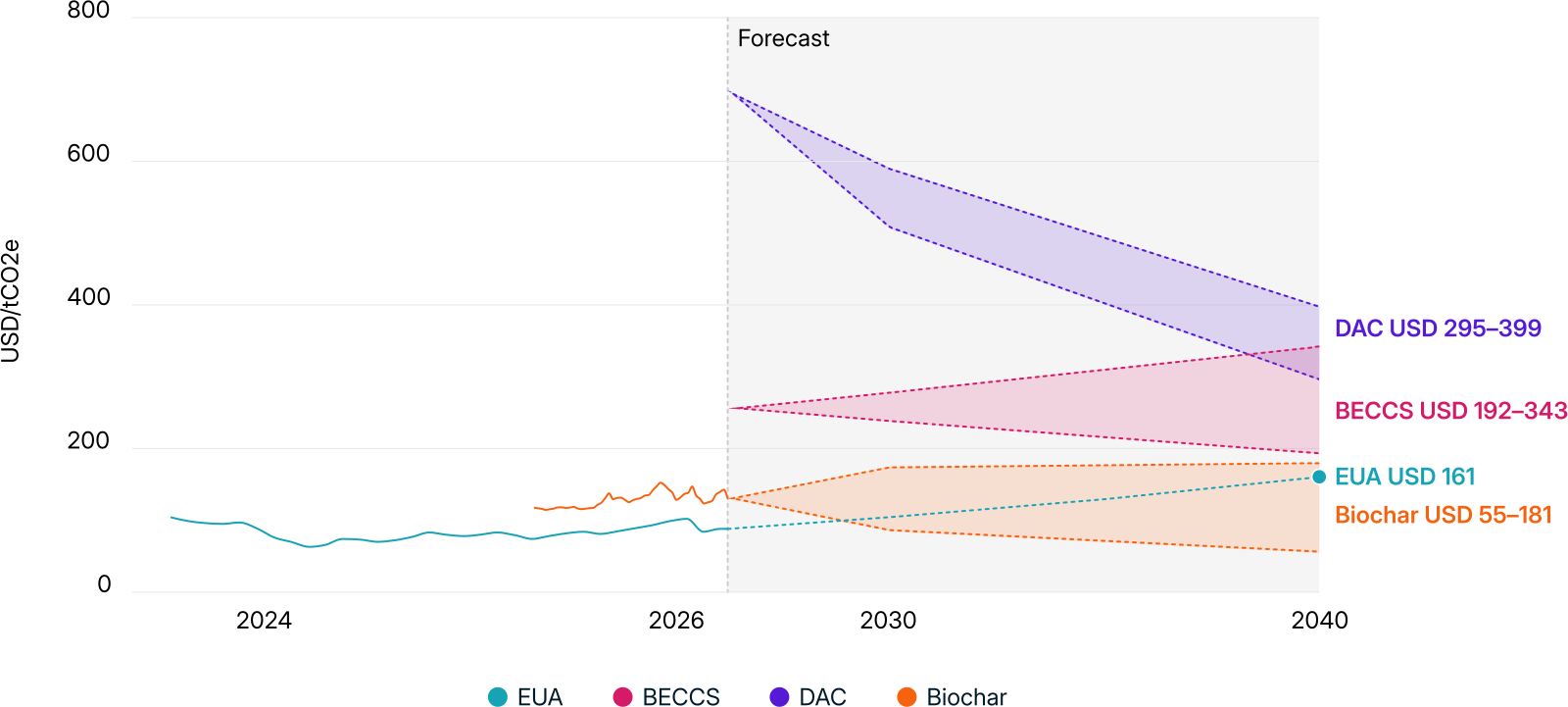
Observed spot prices to early 2026 (solid lines) are shown alongside MSCI central forecasts (dotted lines), with shaded bands indicating projected 2040 ranges. The forecast is displayed on a compressed time axis. EUA and biochar are MSCI spot-price indexes. Forecasts are illustrative and not price forecasts. Source: MSCI Global Carbon Credit Market Scenarios

Subscribe todayto have insights delivered to your inbox.
SBTi Opens a New Pathway for Carbon Credits
SBTi's updated net-zero standard gives carbon credits a formal role on the path to net zero under the OER framework, potentially creating new sources of demand in voluntary carbon markets.
Carbon Credits Come of Age in 2025
Carbon-credit markets held steady in 2025, while growing demand for higher-quality and removal credits is reshaping pricing, demand and long-term growth prospects.
Carbon Markets Policy and Guidance
Stay informed on carbon market policies, evolving regulations and key initiatives that impact climate commitments, carbon credit use and project decisions.
1 CORSIA (Carbon Offsetting and Reduction Scheme for International Aviation) is the International Civil Aviation Organization's global carbon-offsetting scheme for international aviation.
The content of this page is for informational purposes only and is intended for institutional professionals with the analytical resources and tools necessary to interpret any performance information. Nothing herein is intended to recommend any product, tool or service. For all references to laws, rules or regulations, please note that the information is provided “as is” and does not constitute legal advice or any binding interpretation. Any approach to comply with regulatory or policy initiatives should be discussed with your own legal counsel and/or the relevant competent authority, as needed.