
Stress in Private Credit Is Broader than Tech
Mentioned in this quick take:
While credit risk among software borrowers has been a concern for investors since early 2026, stress has not been limited to that sector of private-credit lending.
Managers in corporate lending have been marking a larger share of loans at distressed-like fair values, with several important sectors showing deterioration through 2024 and 2025. Health care has experienced the most dramatic change, with 7.0% of health-care loans marked below 80 cents on the dollar at the end of 2025. That was up from 4.5% 18 months earlier and 3.7% before the Federal Reserve began raising interest rates in 2022.
IT borrowers have also been under pressure. The share of IT loans marked below 80 reached 6.1% in Q3 2025 — a five-year high — before easing the following quarter. This general upward trend in IT markdowns predated Q1 2026 concerns over a potential “SaaSpocalypse,” precipitated by the launch of Claude Cowork, suggesting that credit stress in the sector was accumulating before AI disruption fears crystallized.
This pattern is broadly consistent with developments on the equity side. Buyout health-care deals have underperformed other sectors since rates lifted off from zero, while buyout returns for IT companies have faltered since 2024. For private-credit investors, sector exposures may require closer scrutiny in 2026, especially if borrowing costs remain elevated and worries about business-model disruption persist.
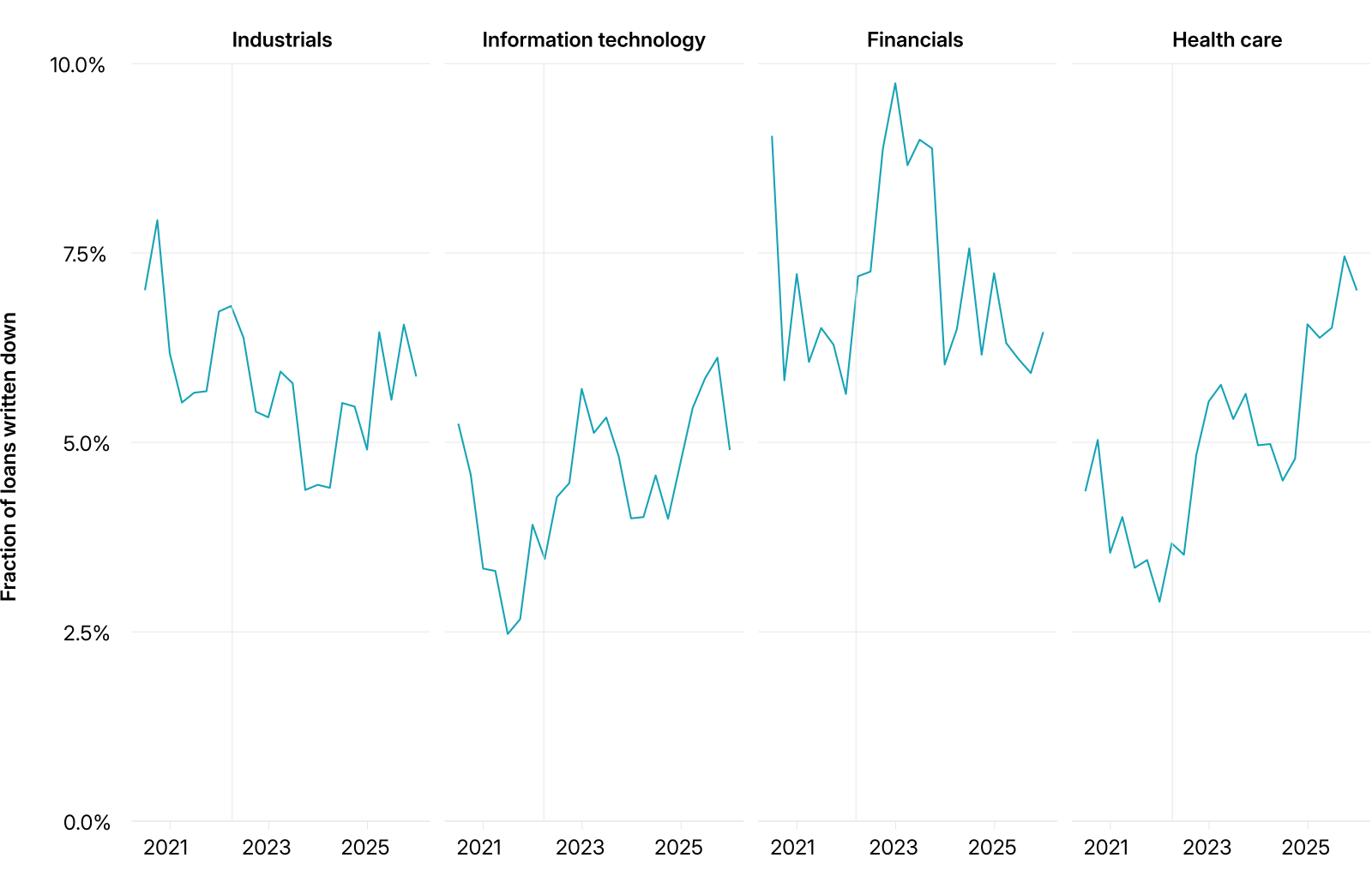
Fraction of loans marked below 80 cents on the dollar across the four largest sectors (by value) in private corporate-lending funds. Vertical markers show the start of Federal Reserve rate increases. MSCI Private Capital Transparency data through Q4 2025, as of analysis on July 13, 2026.

Subscribe todayto have insights delivered to your inbox.
The State of Private Markets 2026
MSCI's inaugural outlook report examines five forces reshaping private markets — with data and insight for asset owners, general partners and wealth investors.
MSCI Private Capital Benchmarks Summary Q1 2026
Differing views on AI’s impact on portfolio companies divided private equity in Q1. We examine the split, and report on performance, capital flows and dry powder across private capital in the quarter.
The content of this page is for informational purposes only and is intended for institutional professionals with the analytical resources and tools necessary to interpret any performance information. Nothing herein is intended to recommend any product, tool or service. For all references to laws, rules or regulations, please note that the information is provided “as is” and does not constitute legal advice or any binding interpretation. Any approach to comply with regulatory or policy initiatives should be discussed with your own legal counsel and/or the relevant competent authority, as needed.