
The Treasury Market’s Iran Problem
Different measures of Treasury-yield volatility have diverged since the start of the Iran war — a pattern that may foreshadow a sudden dislocation in the Treasury market. Implied volatility in Treasury yields has steadily risen, while realized volatility has lagged, and yield dispersion — a measure of price consistency across the curve — has remained flat. Historically, these three measures move in lockstep during periods of macro stress, as they did during both the "Liberation Day" shock in April 2025 and the COVID-19 crisis of 2020.
Options markets are pricing in mounting risk, but that has yet to materialize in actual rate moves. And the flatness of yield dispersion suggests that curve pricing remains relatively orderly, even as headline volatility climbs. That combination is unusual — and it has rarely persisted for long. Meanwhile, we are seeing reduced market depth,1 and the Treasury basis trades that were widely feared as a source of instability during the April 2025 dislocation are larger than ever.2 The ingredients are in place for a repeat of April 2025.
The Treasury-market dislocation in the aftermath of the "Liberation Day" tariffs was swiftly calmed by a 90-day pause in tariffs, but a dislocation driven by an ongoing military conflict may not have such a simple remedy.3
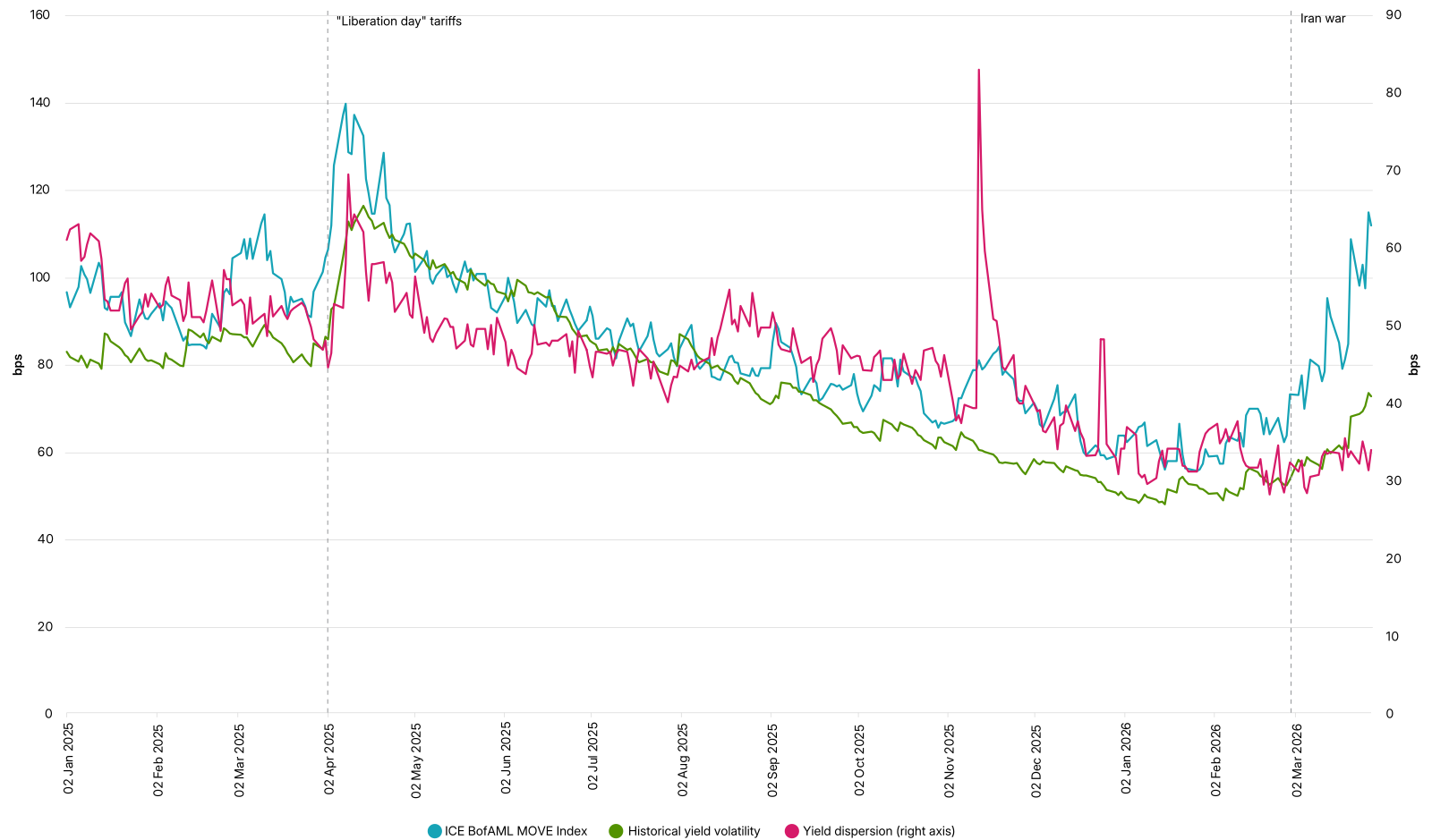
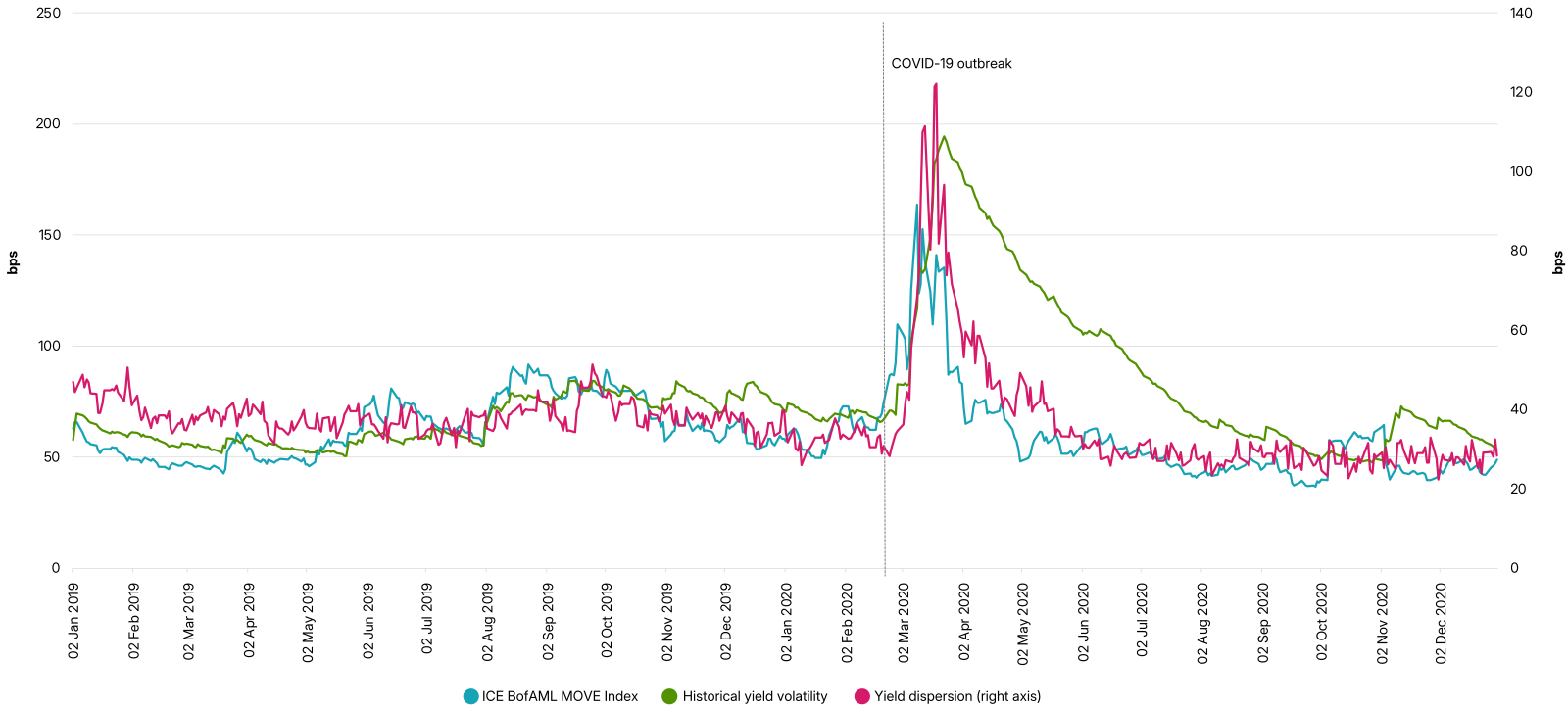
Historical yield volatility is the 21-day exponentially weighted moving average yield change. Yield dispersion is the median absolute value of the curve-implied option-adjusted spread (OAS) and the market OAS. The spike in yield dispersion on Nov. 12, 2025, coincided with the end of the government shutdown and changing short-term rate expectations. Source: ICE, MSCI
The author thanks Daniel Aguirre for his contributions to this post.

Subscribe todayto have insights delivered to your inbox.
Iran War Breaks Link Between Oil Prices and GCC Markets
The Iran war flipped market dynamics in Gulf Cooperation Council countries for oil-equity correlations, credit spreads and factors. We explain where investors need to focus and, perhaps, reassess.
A Multi-Asset Playbook for Geopolitical Shocks and Oil Supply Disruption
We examine how asset classes have performed across geopolitical conflicts linked to oil supply disruption — and what the latest escalation in Iran may mean for multi-asset investors.
Tariffs Have Strained Bond Markets — and Created Opportunities
While headline tariff risk has been dominated by equity levels and Treasury yields, stress in fixed-income markets is also evident in the mispricing of bonds relative to the curve.
1 Kate Duguid and Ian Smith, “US bond market shows signs of strain as Iran war sparks Treasury tumult,” Financial Times, March 26, 2026.
2 Alex Harris, “Basis Trade Has Ballooned to $1.5 Trillion, Morgan Stanley Says,” Bloomberg, Jan. 13, 2026.
3 Greg Ip, “The Dollar and the Bond Market’s Ominous Message for Trump,” Wall Street Journal, April 10, 2025.
The content of this page is for informational purposes only and is intended for institutional professionals with the analytical resources and tools necessary to interpret any performance information. Nothing herein is intended to recommend any product, tool or service. For all references to laws, rules or regulations, please note that the information is provided “as is” and does not constitute legal advice or any binding interpretation. Any approach to comply with regulatory or policy initiatives should be discussed with your own legal counsel and/or the relevant competent authority, as needed.