
Iran War Drags on Emerging Markets’ Structural Tailwinds
- The MSCI Emerging Markets Index returned 34% in 2025 and led most asset classes into early 2026, but the Middle East conflict erased 13% in a month, testing if EM's structural tailwinds can survive a geopolitical shock.
- Energy dependency linked with the Strait of Hormuz and the unwinding of crowded positions in AI and tech-hardware stocks drove EM’s underperformance during the March 2026 conflict.
- Asset allocators should approach EM with greater selectivity. Valuations and earnings growth remain supportive, but inflation, USD strength and rising risk premiums demand clarity on country-level exposures.
A weaker dollar, cheaper relative valuations and earnings momentum renewed institutional investors’ interest in emerging markets (EM) heading into 2026. Those structural themes have not disappeared. But the war in Iran has shown that EM’s concentrated exposures to oil-transit chokepoints, Gulf Cooperation Council (GCC)-linked revenues and crowded positions in a narrow set of stocks can erase months of gains in days. Countries with direct oil-transit or GCC exposure bore the brunt of these risks, while others with different demand drivers were more insulated. The dispersion in outcomes across countries highlights that EM are far from a uniform allocation.
For asset allocators, the implication is to approach EM with greater selectivity and clarity on underlying exposures. Differentiating countries by their valuation profiles, earnings trajectories, factor positioning and sensitivity to global growth may be key to navigating both downside shocks and potential recovery timelines.
EM public equities delivered a standout 2025, outperforming most other asset classes in the EM universe by margins not seen since 2017. That was until the U.S. and Israeli strikes on Iran began in early March. EM underperformed developed markets (DM) by around 7% in March alone, dragged down by negative oil-sensitivity factor exposures, heavy dependence on crude transiting the Strait of Hormuz and outsized revenue ties to Gulf economies. The very stocks that had led EM higher through 2025 — many of them concentrated in AI and tech-hardware names — pulled EM down after the conflict began. Crowded positions unwound sharply, with EM's crowding factor declining more than 1% in the first two weeks of March and registered a four-standard-deviation event.1 EM equities then rebounded sharply in April, gaining around 14.7% following the ceasefire announcement by the U.S. and recovering nearly all the March drawdown. But the durability of that ceasefire remains uncertain, and asset allocators need to make decisions now.
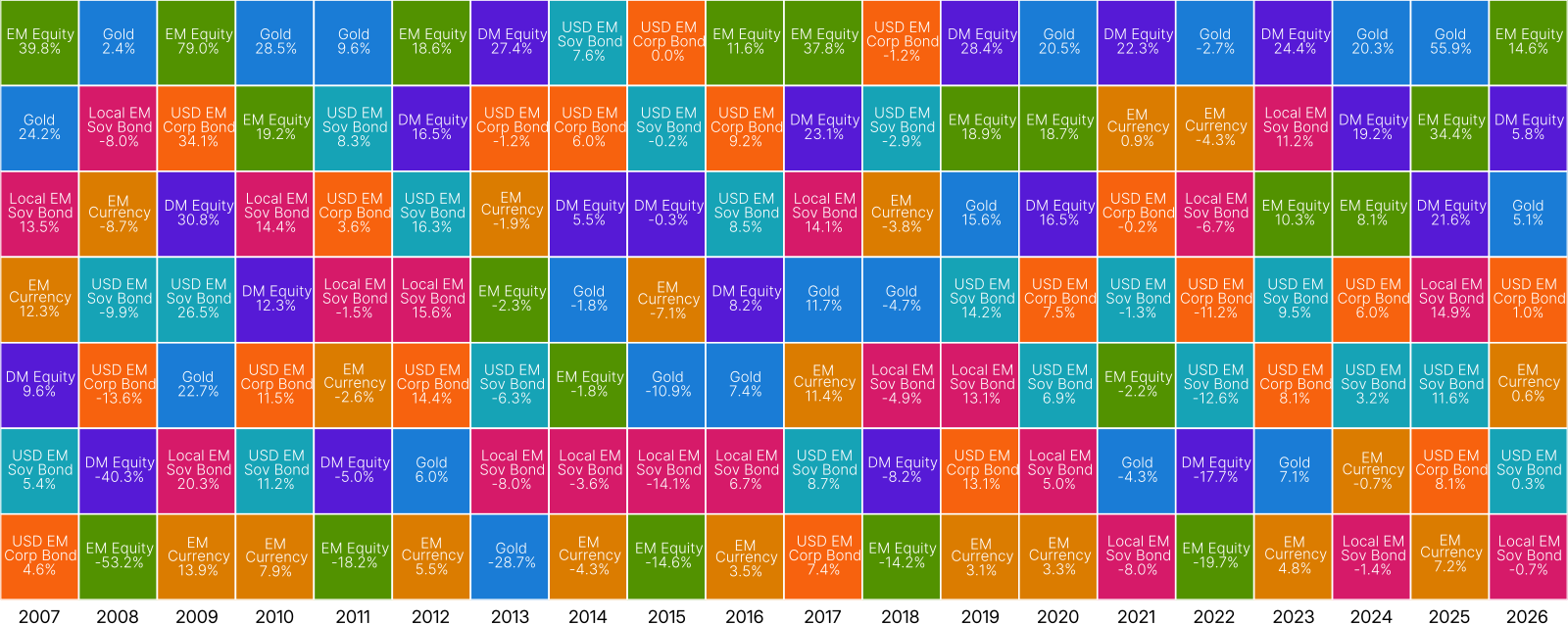
Data from 2007 through April 30, 2026. Total returns in USD for the MSCI EM multi-asset class indexes. Gold is represented by the MSCI Gold Futures Index. DM equity is represented by the MSCI World Index.
When the U.S. dollar has weakened relative to EM currencies, EM equities have outperformed DM in local currency terms. (A weaker dollar eases pressure on EM central banks to maintain tight monetary policy, reduces the burden of dollar-denominated debt on EM corporates and may draw capital toward higher-growth economies.) This happened again in 2025: EM currencies rose against the USD and the MSCI EM Currency Index climbed alongside EM equity returns.
The March 2026 oil shock reversed this dynamic, as geopolitical uncertainty drove a flight to the dollar, putting pressure on EM currencies. That said, the MSCI EM Currency Index declined just 2.95% from its February 2026 peak to its March 2026 trough — less than the 10% drawdown during COVID-19 and the 20% decline during the 2008 global financial crisis (GFC) — indicating the dollar's safe-haven bid was more muted this time around.
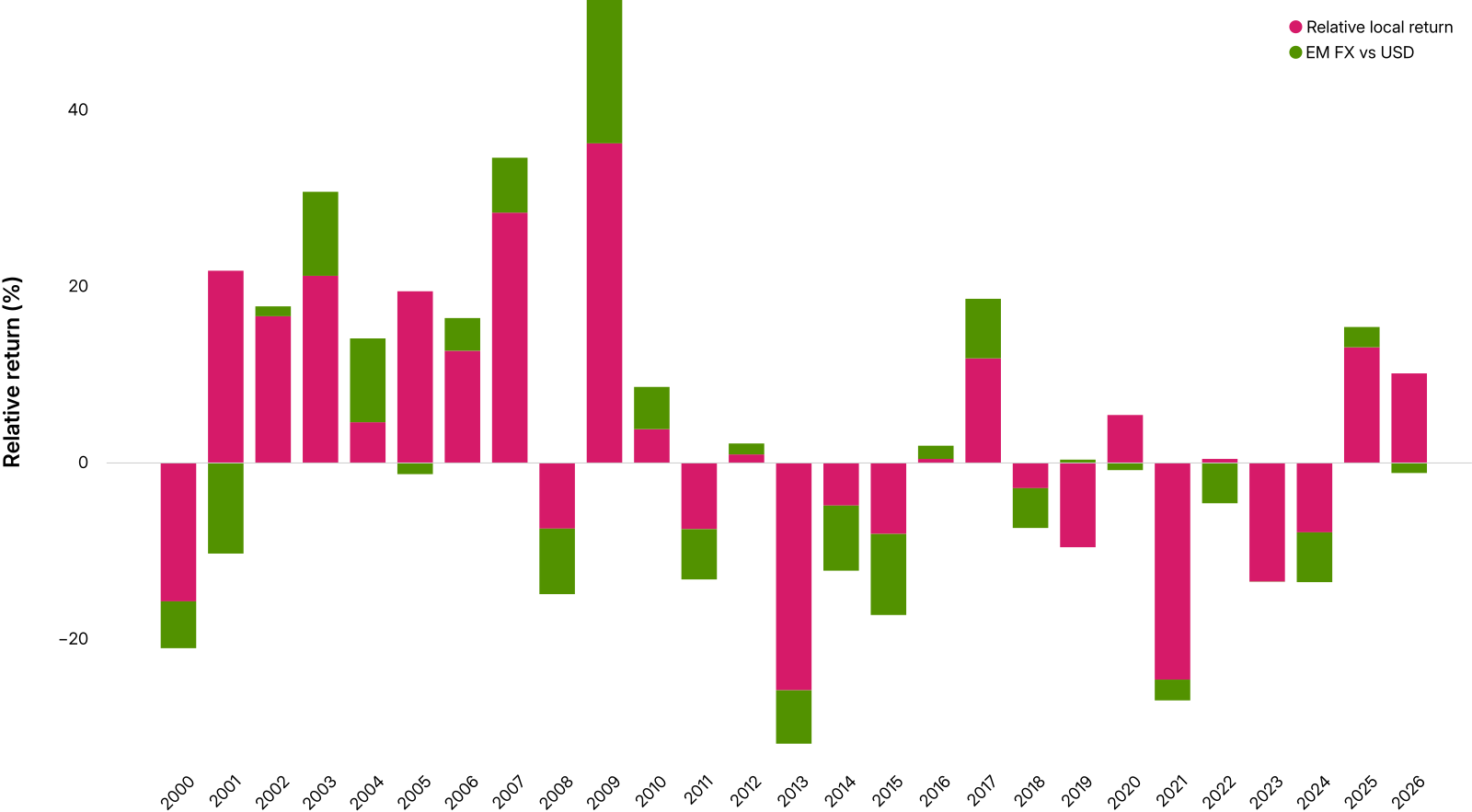
Data from 2000 through April 30, 2026. DM is represented by the MSCI World Index. Relative performance is the decomposition of EM and DM USD relative returns excluding the DM FX component for visualization. Excluding DM FX component doesn’t change the direction of relative returns for this sample period.
EM have mostly traded at a discount to DM since 2003, and at the start of 2026 the forward P/E of the MSCI EM Index relative to the MSCI World Index was well below its long-run mean. A 34% return in 2025 barely moved the valuation needle relative to DM and the March 2026 underperformance pushed it even lower.
Beneath the headline discount, however, the picture was far from uniform. A combined z-score of trailing P/E, forward P/E, P/B and dividend yield showed that Taiwan and South Korea were the only areas of EM trading above DM's valuation level, lifted by the AI and semiconductor rally. India and China traded close to their historical mean. At the other end, the Philippines, Indonesia, Qatar and Mexico were at the steepest discounts to their own histories. At the sector level, information technology and industrials sectors traded around DM's valuation level, reflecting global AI spending and commodity strength, while consumer staples traded well below their historical means.
This dispersion matters because valuation re-rating contributed to long-term EM returns during periods that began from relative underperformance and some may see it as a tailwind after the March 2026 selloff. However, history also shows that cheap valuations alone have not been sufficient to drive sustained outperformance.
Z-score is the equal weighted score of trailing P/E, 12M forward P/E, P/B and dividend yield z-scores for each country/region relative to their own history for the sample period is April 30, 2003, to April 30, 2026, except for Poland, Egypt, UAE, Qatar, Saudi Arabia, Kuwait and the real estate sector where the sample period starts from the index inception data.
The long-term return decomposition of EM shows that earnings growth and dividends consistently accounted for the bulk of annualized performance. On that front, the picture heading into Q2 2026 remained constructive. Year-over-year changes in consensus short-term EPS growth estimates for EM improved by more than 15% as of March 2026, far ahead of the U.S., Europe and Japan.
Even after the onset of the conflict in Iran, EM estimates improved relative to February, with South Korea leading on semiconductor demand. Within sectors, energy saw the sharpest upgrade driven by the rise in crude oil prices, while real estate suffered the steepest downgrade due, in part to high inflation expectations.
A prolonged Middle East conflict that spills into sustained oil-price inflation could reset the macro-outlook more broadly, compressing earnings expectations across EM regions and sectors.
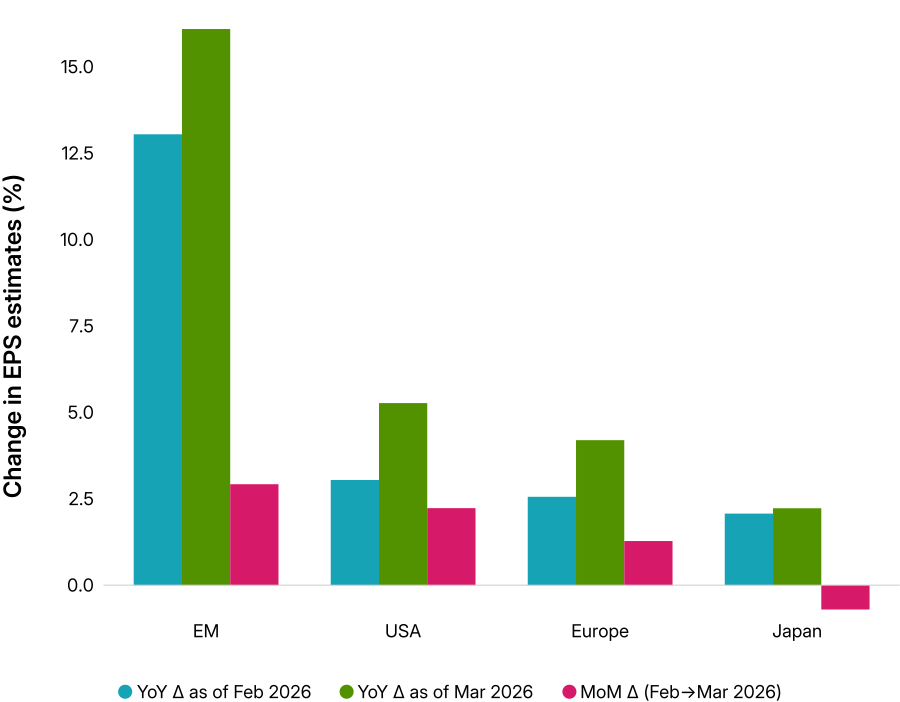
Data as of March 31, 2026. Change in short-term EPS estimates between February 2025 and February 2026, March 2025 and March 2026 and February 2026 and March 2026. Short-term forward EPS growth rate is the growth rate between index 12-month backward EPS and the 12-month forward EPS.
As shown below, EM have outperformed DM by roughly 8% annualized during periods of growth acceleration and underperformed during growth shocks. In the neutral zone, where we likely sit today, EM still held a modest edge of roughly 2%.
The current backdrop pulls in opposing directions. The conflict, a crude-oil spike and potential disruptions to global supply chains argue for caution. Against that, AI-driven productivity gains and demand for commodities such as copper, rare earths and precious metals may support resource-rich EM economies, such as Brazil and South Africa. Whether this conflict remains short-lived or escalates into a sustained energy disruption could determine which growth regime EM enters and how much of its cyclical tilt comes into play.
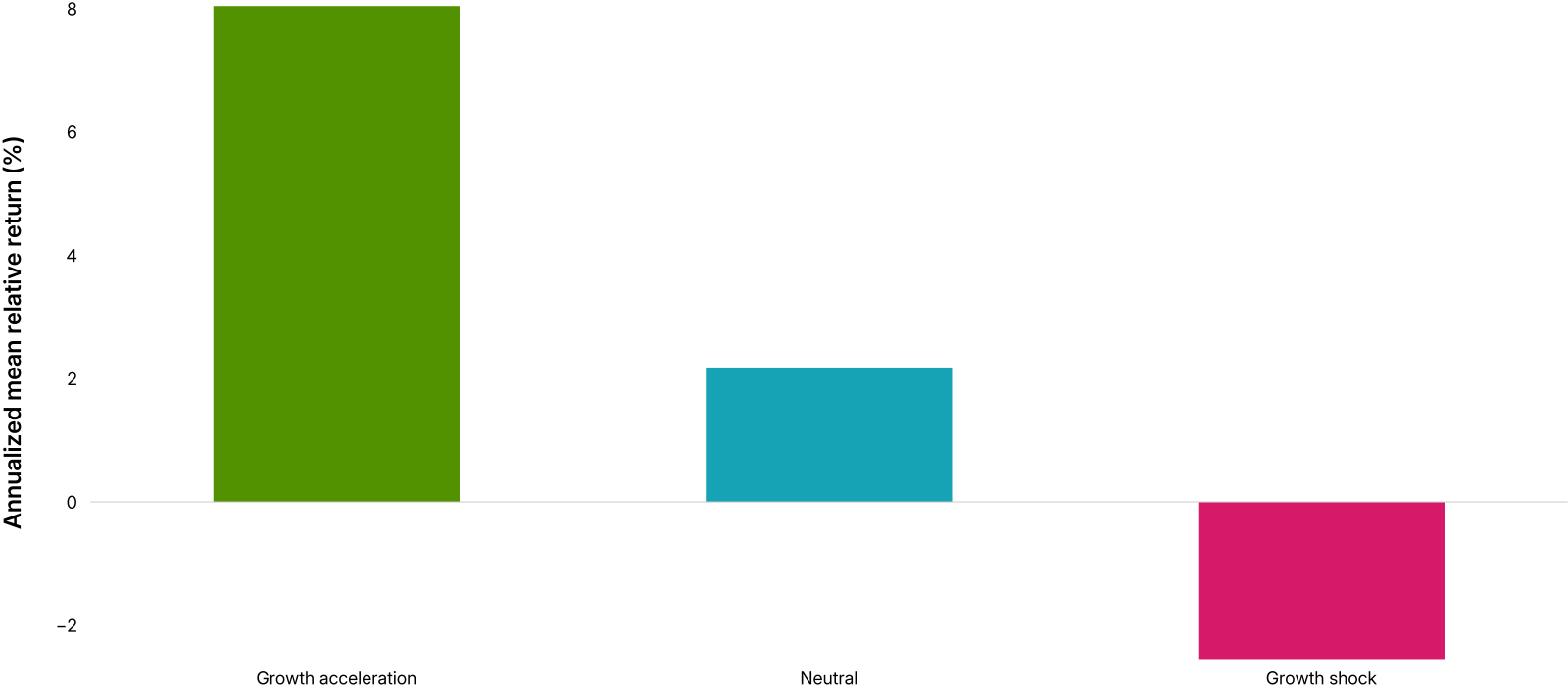
Sample period: Dec. 31, 1998, to March 31, 2026. We classified months into three regimes using the six-month momentum of the OECD Composite Leading Indicator (CLI): growth acceleration (top decile, ~10% of months, 33 months), growth shock (bottom decile, ~10% of months, 33 months) and neutral (remaining ~80%, 261 months). Annualized mean relative returns represent the difference between MSCI Emerging Markets Index and MSCI World Index returns, calculated from monthly index levels.
The structural case for allocation to EM still exists, but the war in Iran has made it harder to express as a single allocation. A weaker dollar, earnings upgrades and cheap valuations relative to DM are real, alongside the risks: a prolonged disruption at the Strait of Hormuz, sustained oil-price inflation and a fragile ceasefire. Asset allocators who can differentiate countries by their oil-transit exposure, GCC revenue links and earnings trajectory may be better positioned to capture the upside, or limit the downside, of whichever outcome follows.
The author would like to thank Anil Rao for his contributions to this blog post.

Subscribe todayto have insights delivered to your inbox.
Iran War Exposed Distinctions for Importing Oil vs. Gas
Oil shocks hurt airlines. Gas shocks hit manufacturers. Treating them as the same “energy exposure” misses the mechanism — and specific risk. Find out which industries face which channel.
Markets in Focus: AI’s Partners Become its Prey
U.S. software is being repriced as AI's next casualty — but with earnings forecasts still rising, the market may be moving far ahead of the disruption it fears.
Emerging Markets Indexes
MSCI Emerging Markets Indexes are built with the aim of helping you measure return in rapidly growing economies around the world.
1 Based on MSCI Global Economic Regions Equity Factor Model.
The content of this page is for informational purposes only and is intended for institutional professionals with the analytical resources and tools necessary to interpret any performance information. Nothing herein is intended to recommend any product, tool or service. For all references to laws, rules or regulations, please note that the information is provided “as is” and does not constitute legal advice or any binding interpretation. Any approach to comply with regulatory or policy initiatives should be discussed with your own legal counsel and/or the relevant competent authority, as needed.